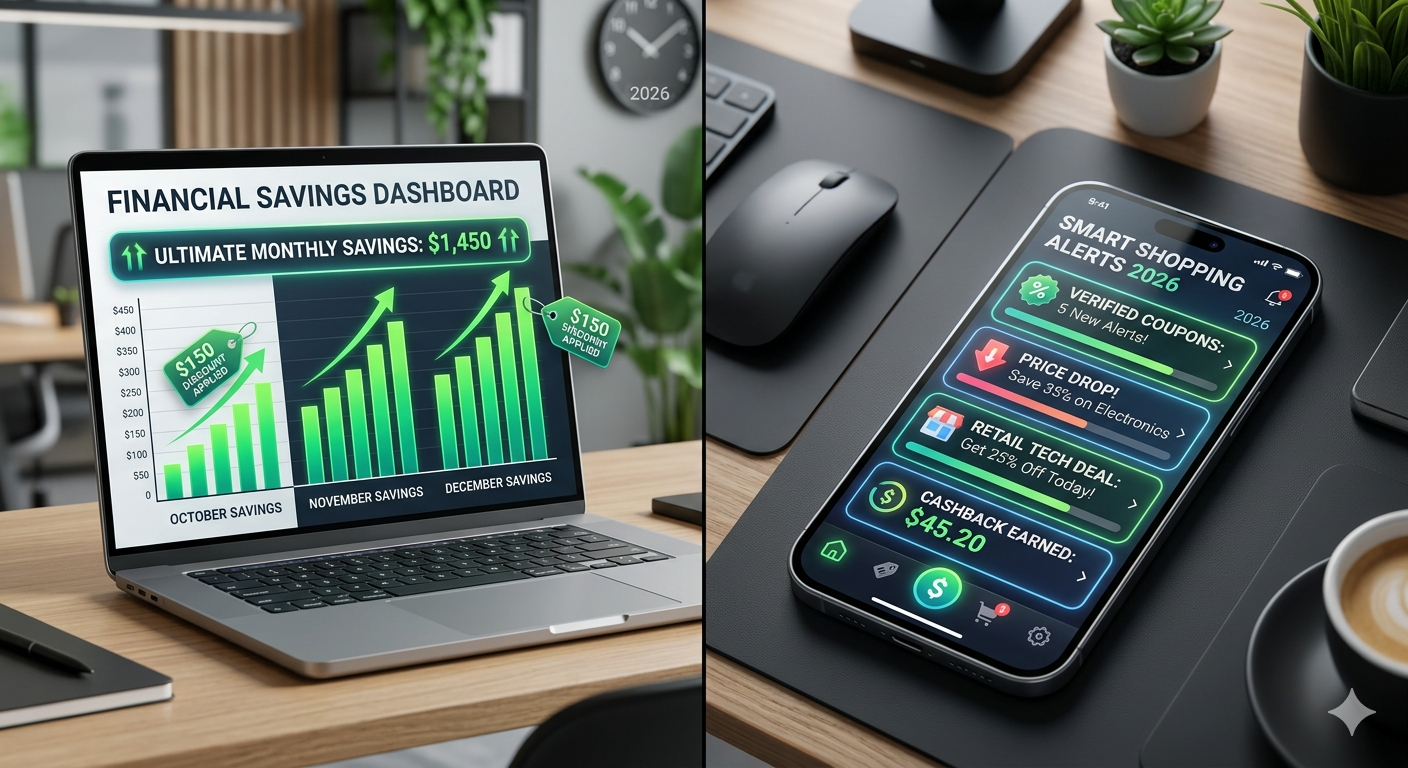

Best Weekend Deals You Should Never Miss: Unlock hidden savings with our expert guide to finding the best weekend deals. Master cart abandonment tricks, stacked coupons, and price history trackers.
Best Weekend Deals You Should Never Miss: Have you ever noticed how the dynamic of online shopping completely transforms the moment Friday afternoon arrives?
During the workweek, e-commerce platforms are relatively quiet, sustained by casual lunchtime scrolling or mundane household reorders. But the moment the weekend hits, an invisible switch flips. Retail algorithms wake up, flash sales go live, inventory systems trigger massive clearance drops, and a fast-paced game of high-stakes savings begins.
To the untrained eye, a weekend sale looks like a chaotic barrage of countdown timers, flashy banners, and limited-time coupon pop-ups. But to seasoned shopping experts, it represents something far more calculated. The weekend is the absolute best time to score massive price cuts on everything from premium consumer technology and domestic flights to designer fashion and home furnishings—if you know how the system operates.
Most everyday consumers leave hundreds of dollars on the table because they shop reactively, clicking on whichever marketing email happens to land in their inbox first.
It is time to change that approach. Let’s break down the psychological mechanics of the weekend retail ecosystem, map out the predictable patterns of recurring price cuts, and detail the exact strategic framework needed to secure the absolute best weekend deals without succumbing to marketing-induced FOMO.
1. The Anatomy of a Weekend Markdown: Why Friday Changes Everything
To capitalize on weekend savings, it is essential to look at the situation from the retailer’s perspective. E-commerce platforms operate on strict weekly and monthly performance indicators. If a brand notices its sales velocity slowing down by mid-week, it needs a fast, high-impact volume injection to hit its weekly revenue projections before the corporate dashboard resets on Sunday night.
This pressure creates a highly predictable window of opportunity.
The Thursday Night “Leaked” Launch
While a sale might be publicly advertised as a “Saturday-Sunday Spectacular,” the foundational architecture of that sale is almost always pushed to production servers on Thursday evening between 7:00 PM and 9:00 PM.
Retailers do this to test code stability, verify cart-level discount rules, and index their new sale pages ahead of the massive Friday morning traffic wave. Smart shoppers don’t wait for the Saturday newsletter; they sweep their target retail sites on Thursday night to secure high-demand inventory before it sells out.
The Core Psychological Triggers You Are Fighting
When you browse a weekend flash sale, you aren’t just looking at a price tag; you are navigating a carefully engineered digital gauntlet designed to bypass your logical brain. Retailers rely heavily on three distinct behavioral levers:
- Artificial Urgency: Ticking countdown clocks and micro-copy like “Sale ends in 04:12:19” create an immediate sense of anxiety. This clock forces your brain to make a snap decision before you have time to cross-shop or evaluate your actual need for the item.
- Perceived Scarcity: Features like “Only 3 items left at this price!” or “14 people have this in their cart right now” leverage social proof and scarcity metrics to trigger a protective instinct. Your subconscious treats the product like a scarce natural resource that must be secured.
- Loss Aversion Over Gain Seeking: Behavioral economics teaches us that the psychological pain of losing out on a $50 discount is twice as powerful as the pleasure of gaining a $50 unexpected bonus. Retailers phrase deals as “Don’t lose your $50 credit” rather than “Save $50” because it targets this specific vulnerability.
By understanding that these elements are structural marketing components rather than objective truths, you can separate the emotional pressure from the financial reality of the offer.
2. Category Breakdown: What to Buy (and Avoid) on the Weekend
Not all product categories are discounted equally over the weekend. Buying the wrong item on a Saturday morning could mean paying a premium, while waiting until Monday could cost you a massive tech clearance window.
Let’s look at the specific retail categories that yield the highest authentic discounts during the Friday-to-Sunday window.
       [WEEKEND BUYING MATRIX]

  ✓ HIGH-YIELD TARGETS       ✗ AVOID / WAIT IT OUT
  --------------------       ---------------------
  • Consumer Tech & Laptops  • Major Household Appliances
  • Apparel & Fast Fashion   • Flights & Hotel Bookings
  • Home Décor & Furniture   • Grocery & Pantry Stockpiles
Consumer Electronics & Refurbished Tech
The weekend is a major battlefield for consumer electronics. Major retailers look to move open-box returns, older hardware iterations, and overstocked warehouse inventory to clear physical shelf space for incoming shipments arriving early the following week.
- The Sweet Spot: Mid-tier laptops, smartwatches, external storage solutions, and home audio gear consistently experience weekend drops.
- The Strategy: Check the “Refurbished” or “Outlet” sub-domains of major manufacturers on Friday mornings. Brands frequently attach stackable weekend coupon codes to certified pre-owned devices that carry identical warranties to brand-new hardware.
Fashion, Apparel, and Footwear Clearances
Fashion retailers experience some of the most volatile inventory turnover in e-commerce. Because clothing trends shift rapidly, apparel brands rely on weekly weekend micro-sales to purge slow-moving sizes and styles.
- The Sweet Spot: Seasonal transitional wear (e.g., buying winter jackets at the tail end of February or swimwear in August) sees its lowest pricing tiers during weekend inventory flushes.
- The Strategy: Look out for “Buy 2, Get 2 Free” bundle models or app-exclusive tier discounts. Brands routinely offer an extra 20% off already marked-down clearance items if the purchase is completed through their proprietary shopping app between Friday night and Sunday afternoon.
Home Décor, Linens, and Mattress Warehouses
The home goods industry operates on a long-tail sales cycle. Consumers rarely buy a mattress or a sofa on a whim mid-week; these purchases are researched and executed when people have free time over the weekend. Because of this consumer behavior, the home sector reserves its deepest structural discounts for the weekend window.
- The Sweet Spot: Bedding sets, area rugs, accent furniture, and memory foam mattresses.
- The Strategy: Always look for holiday weekend extensions. If a standard weekend yields a 15% discount, a holiday weekend (such as extended Memorial Day, Labor Day, or New Year sales) will routinely scale those markdowns to 50% or 60% off via warehouse clearance surpluses.
3. The Digital Arsenal: Automated Tools That Do the Heavy Lifting
Trying to track weekend sales across dozens of websites manually is a recipe for mental exhaustion. The modern smart shopper doesn’t hunt for deals; they configure a digital ecosystem that aggregates, tracks, and delivers the best pricing data directly to them.
By leveraging specialized web infrastructure, you can fully automate the discovery and verification process.
Multi-Marketplace Aggregators
Instead of checking individual retail outlets one by one, use decentralized shopping engines. Modern platforms allow you to input a single product query and search across multiple major secondhand, refurbished, and primary retail marketplaces simultaneously.
Tools like Faircado (popular for aggregating secondhand and refurbished luxury fashion and tech) or global community-vetted deal networks like Slickdeals provide a unified dashboard. This setup ensures you can spot pricing anomalies across competing networks in real-time without leaving your browser tab.
Cashback Stacking Ecosystems
A discount code is only the first layer of a professional savings strategy. To maximize value, you must stack that primary discount with backend financial tracking tools.
- Browser Extensions: Tools like Rakuten or RetailMeNot maintain real-time databases of crowdsourced coupon codes. When you reach a checkout page on a Saturday afternoon, these extensions automatically inject and test dozens of alphanumeric combinations in seconds, selecting the code that yields the absolute lowest subtotal.
- Passive Cashback Activation: Beyond upfront coupons, keeping a cashback portal active can net you an additional 2% to 12% back on your weekend purchases, paid out via PayPal or direct deposit. This step turns every standard transaction into a compounding discount.
Price History Verifiers
The most important rule of weekend shopping is simple: A price drop is only a deal if it is lower than the long-term historical average. Retailers often raise an item’s base price on a Wednesday only to “discount” it back to its standard retail price on Friday morning, slapping a bright red “20% OFF WEEKEND SPECIAL” sticker on it.
To protect yourself from this pricing manipulation, cross-reference every major purchase with historical tracking databases like CamelCamelCamel (for Amazon product histories) or generic price engines like Honey’s Price History. If the chart shows that the item was cheaper three weeks ago during a random Tuesday afternoon, pass on the deal and wait for the true cyclical baseline to return.
4. The Advanced Playbook: Step-by-Step Strategic Frameworks
Now that we understand the timing, categories, and technical tools, let’s assemble them into an actionable operational workflow. If you want to systematically extract the absolute lowest possible prices every weekend, follow this precise execution model.
| Step | Time Window | Actionable Objective | Expected Outcome |
| 1. The Digital Caching Phase | Mon – Wed | Build target wishlists; log into primary retail profiles. | Populates retail databases with high-intent user profiles. |
| 2. The Cart Abandonment Strategy | Thursday Morning | Add items to cart; exit the site completely before checkout. | Triggers automated retention emails and exclusive discount codes. |
| 3. The Incognito Inversion Sweep | Friday 8:00 PM | Clear browser cache; deploy cross-marketplace searches. | Neutralizes dynamic regional pricing adjustments. |
| 4. The Cashback & Coupon Stack | Saturday Checkout | Deploy automated extension testing; pay via reward capital. | Compounds structural markdowns with fluid financial cashbacks. |
Step 1: The Digital Caching Phase (Monday through Wednesday)
Do not browse for deals on the weekend when your emotional impulses are high. Instead, treat the first half of the week as an information-gathering mission. Identify the specific items you actually require—whether that is a replacement monitor, a new pair of running shoes, or a high-quality rug for the living room.
Add these items to a dedicated wishlist folder on your browser or inside your favorite aggregator app. Make sure you are logged into your retail accounts while doing this. This leaves a digital footprint in the retailer’s analytics platform, flagging your profile as a “high-intent, uncompleted shopper.”
Step 2: The Cart Abandonment Strategy (Thursday Morning)
On Thursday morning, navigate to your saved items, move them directly into your shopping cart, and advance all the way to the final checkout screen where your shipping information is filled out.
Then, stop. Close the browser tab entirely and walk away.
By leaving the items stranded in the cart right before the weekend sale architecture goes live, you throw a red flag into the brand’s customer retention system. Because the brand is desperate to hit its weekend volume quotas, their automated email servers will frequently fire off an automated rescue sequence within 12 to 24 hours. These emails often arrive on Friday containing hidden, personalized single-use coupon codes (such as an extra 15% off or free priority shipping) designed to convert you before Sunday night.
Step 3: The Incognito Inversion Sweep (Friday Evening)
When you are ready to review your options on Friday night, do not use your standard browser configuration. Modern e-commerce platforms track your cookies, device type, geographic location, and local network speeds to estimate your economic bracket, adjusting prices upward if they perceive you as a high-income user.
Open a completely fresh private browsing window (Incognito Mode) or utilize a secure virtual private network (VPN). This forces the retailer’s system to view you as a brand-new, price-sensitive visitor. Search for your target items using a broad multi-marketplace aggregator to find the pure market baseline across competing platforms before applying any coupons.
Step 4: The Cashback & Coupon Stack (Saturday Execution)
When executing the final purchase on Saturday, maximize your point-of-sale efficiency by stacking multiple independent discount layers sequentially:
- Layer 1: The base weekend sale markdown inherent to the product page.
- Layer 2: Your abandoned cart rescue code or the highest-yielding coupon discovered by your automated browser extensions.
- Layer 3: The passive cashback percentage activated via your tracking portal.
- Layer 4: Executing the final transaction using a dedicated rewards credit card that offers an additional 2% to 5% cash back on retail categories.
By layering these financial vectors on top of each other, you can routinely turn a baseline 20% store discount into a compounding 45% structural price reduction.
5. Master the Weekend Savings Roadmap
To turn these high-impact strategies into an effortless, repeatable routine without cluttering your schedule, follow this step-by-step sequence to build out your ultimate personal finance savings engine.
1.Configure Your Automated Defense Stack:Estimated time: 30 minutes.
Install a reliable multi-marketplace aggregator, activate a vetted coupon-testing extension, and set up a clean, historical tracking portal within your primary browser profile.
2.Curate and Cache Your High-Intent Target Lists:Estimated time: 1 hour (Mid-Week).
Identify necessary purchases from Monday through Wednesday, log into your verified merchant profiles, and save items to a localized folder to seed retailer tracking systems.
3.Deploy the Cart Abandonment Trigger Sequence:Estimated time: 15 minutes (Thursday).
Move target items into active shopping carts, proceed straight to the final shipping verification module, and immediately terminate the session to trigger automated retention discounts.
4.Execute the Multi-Tiered Stacking Protocol:Estimated time: 20 minutes (Fri-Sat).
Open an incognito browsing window, verify long-term price histories against peak charts, activate backend cashback rewards, and complete checkout using card-level rewards capital.
Summary Action Plan: The Smart Shopper’s Checklist
- Banish the Monday-Wednesday Purchases: Unless it is an absolute emergency, never purchase non-essential consumer goods during the middle of the workweek when pricing algorithms are set to their standard maximum baselines.
- Always Verify Price History Charts: Never trust a retail site’s colorful “Sale” badge at face value. Spend ten seconds checking a historical tracking chart to confirm the current price is a genuine cyclical low.
- Automate Your Coupon Discoveries: Let lightweight browser extensions handle the heavy lifting of sourcing, testing, and applying coupon codes at checkout to eliminate human error and overlooked promotions.
- Leverage Passive Financial Layers: Never complete a weekend transaction without ensuring a cashback portal is actively tracking your session and your payment method is yielding optimal rewards points.
Frequently Asked Questions (FAQs)
Why are prices often cheaper on weekends compared to mid-week?
Retailers experience sharp drops in organic user traffic during the middle of the workweek when consumers are focused on professional obligations. Over the weekend, user engagement surges as people have free time. To capture this high-volume audience and hit strict weekly corporate revenue targets, brands deploy aggressive short-term price drops, flash sales, and clearance structures that disappear by Monday morning.
Is it always safe to shop on refurbished and secondhand aggregator sites?
Yes, provided you use reputable, verified aggregators that feature built-in consumer protection programs. Platforms like Faircado and major manufacturer outlets pre-screen inventory, verify seller ratings, and offer structural hardware warranties (frequently 12 to 24 months) that mirror original factory protections, drastically minimizing transactional risk.
What exactly is “Dynamic Pricing,” and how can I stop it from costing me money?
Dynamic pricing is an automated e-commerce mechanism that uses algorithms to continuously adjust prices in real-time based on your personal browsing cookies, local zip code, historical search velocity, and device type. You can easily neutralize this tracking by clearing your browser cookies, shopping inside an incognito private window, or using a VPN to standardize your digital profile.
How long should I leave an item in an abandoned cart before expecting a coupon code?
The sweet spot for cart abandonment is between 24 and 48 hours. Initiating the sequence on a Thursday morning gives the retailer’s automated marketing logic ample time to categorize your account as an uncompleted lead, firing off an exclusive rescue coupon just in time for their Friday afternoon weekend promotional push.
Do weekend flash sale countdown timers reflect real stock limitations?
In the vast majority of mainstream retail scenarios, no. Most digital countdown clocks and stock warning notifications are artificial UI elements designed by behavioral psychologists to induce mild panic, urgency, and immediate conversion. Always ignore the visual countdown clock and prioritize historical price verification over emotional compliance.