
Caring for a bedridden or mobility-challenged loved one is one of the most profoundly compassionate acts a person can perform. But let’s be completely honest: it is also physically exhausting.
If you are a family caregiver, you know the daily routine all too well. Helping a parent, spouse, or patient transition from a sit-to-stand position often turns into a high-stress, physically demanding ordeal. For generations, traditional manual patient transfers required at least two fully capable adults just to prevent a dangerous fall. Even then, caregivers frequently end up with chronic lower back pain, strained muscles, and constant anxiety.
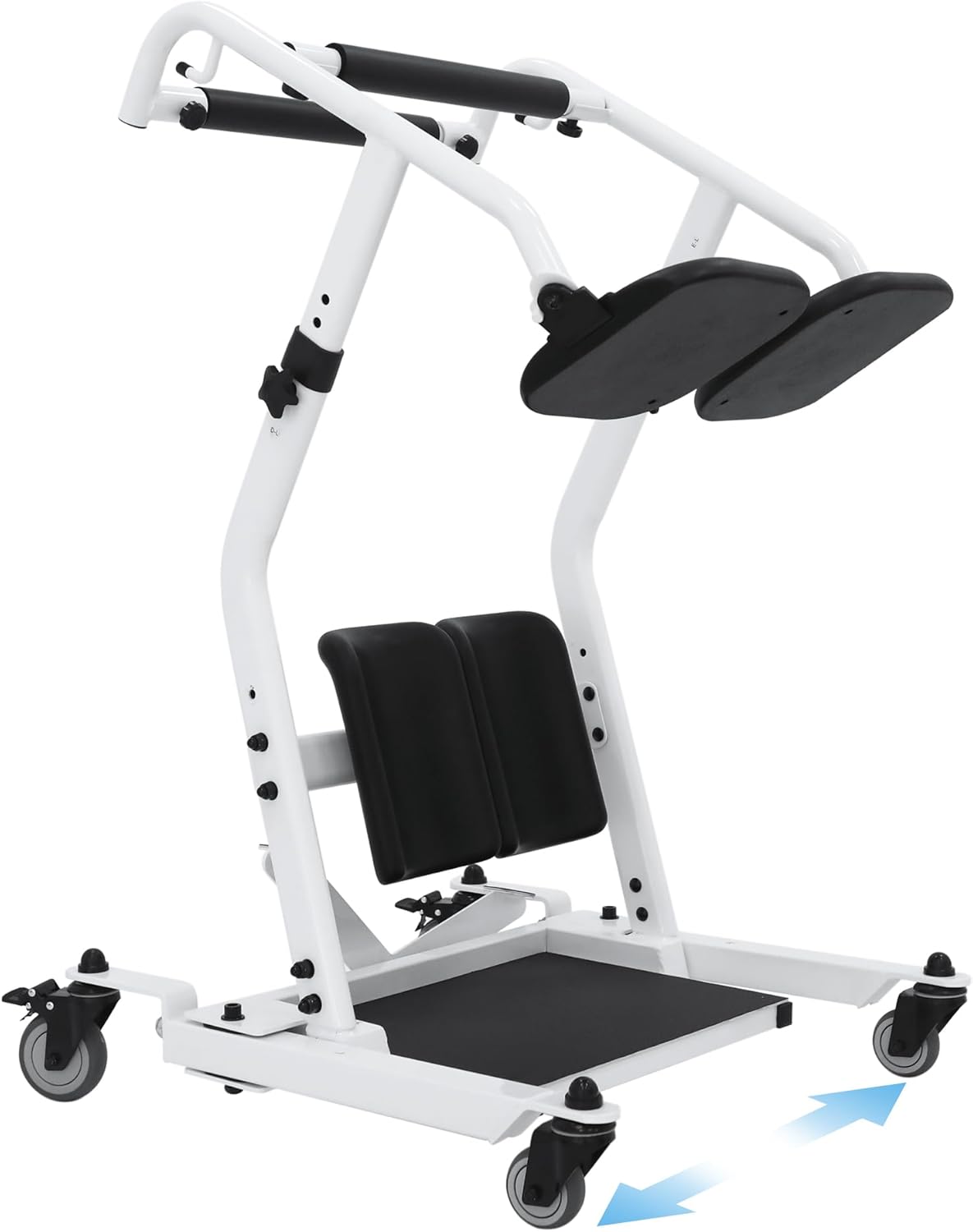
Fortunately, modern home care medical equipment is changing the game. With the innovation of the Upgraded Stand Assist Patient Transfer Lift (400 lbs Capacity), safe transfers no longer require a team of people.
In this comprehensive guide, we will break down everything you need to know about implementing stand-assist technology in your home care routine, including step-by-step instructions on how to use it, what to do to ensure maximum safety, and where to seamlessly implement it throughout your house.
What is a Stand Assist Patient Transfer Lift?
Before diving into the operational details, it is crucial to understand what makes this specific home care device so revolutionary.
A Stand Assist Lift (often referred to as a sit-to-stand lift) is an active mobility device designed for individuals who have some degree of upper body strength and weight-bearing capability but need significant mechanical assistance to transition from a seated position to a standing posture.
Unlike passive Hoyer lifts—which lift a patient fully suspended in a hammock-style sling—a stand-assist lift actively engages the user’s body, allowing them to participate in the movement.
Key Features of the Upgraded Model:
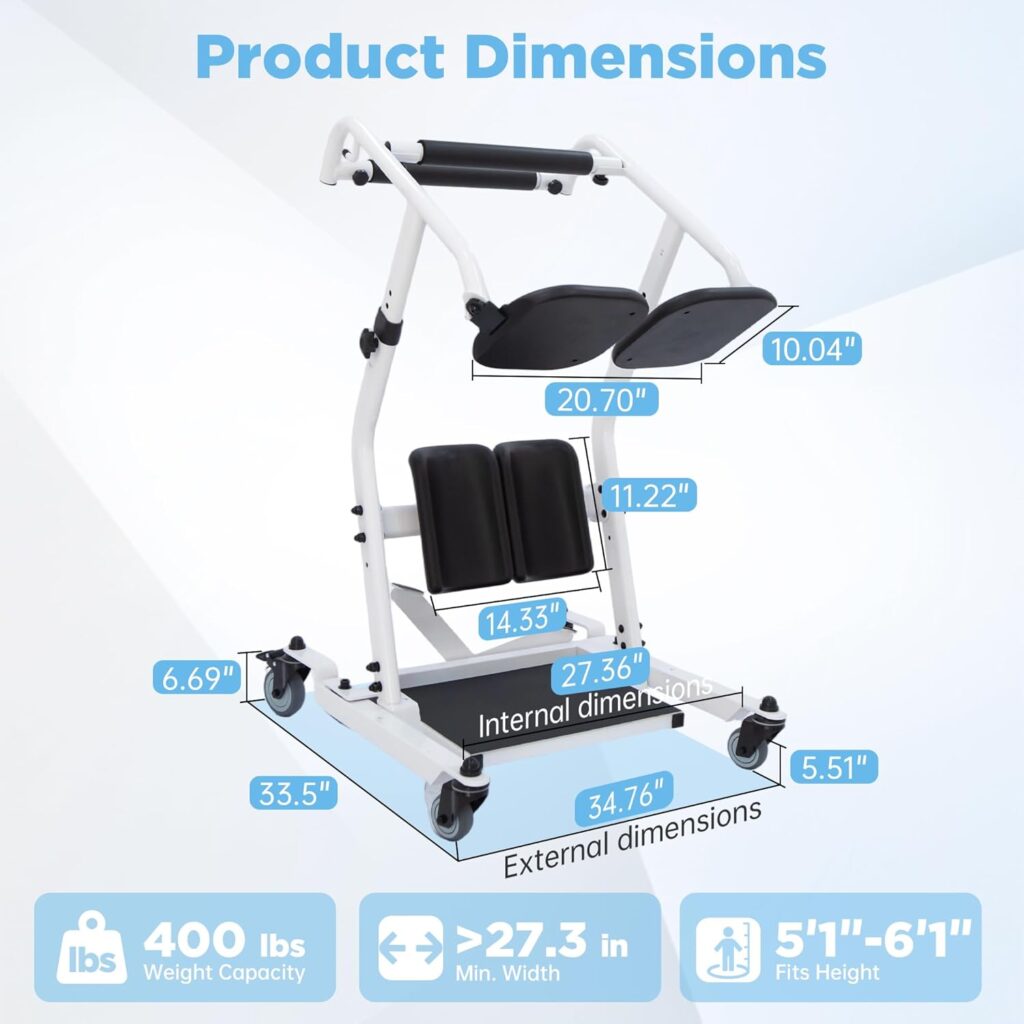
- Massive 400 lbs Weight Capacity: Built with a reinforced, heavy-duty steel frame designed to safely support bariatric and standard patients alike.
- Fully Adjustable Mechanics: Offers customizable height levels and adjustable knee pads to align perfectly with the user’s specific anatomy.
- Dual Security Ergonomics: Features non-slip footplates, padded shin guards, and highly secure multi-point harness anchor spots to guarantee zero slipping during operation.
- Fluid Mobility: Equipped with premium, 360-degree swiveling locking casters that roll effortlessly over hardwood, tile, and low-pile residential carpets.
How to Use a Stand Assist Lift: A Step-by-Step Caregiver’s Guide
Operating mechanical medical equipment inside a home can feel intimidating at first. However, the Upgraded Stand Assist Lift is explicitly engineered with intuitive controls to ensure that a single caregiver can execute a flawless transfer.
Follow this definitive How-To guide to perform transfers confidently and safely.
Step 1: Pre-Transfer Assessment and Positioning
Before bringing the lift to the patient, make sure your loved one is sitting securely on the edge of the bed, couch, or wheelchair. Ensure their feet are bare or clad in non-slip socks.
- Roll the stand assist lift directly in front of the seated patient.
- Spread the adjustable base legs of the lift to their widest stable position to increase overall stability.
- Crucial Step: Step firmly down on the rear caster brakes to lock the lift completely in place. Never attempt a transfer with unlocked wheels.

Step 2: Placing the Patient’s Feet and Knees
Help your loved one slide their feet onto the heavy-duty, non-slip footplate.
- Ensure their soles are completely flat against the platform.
- Guide their shins or knees so they rest firmly against the contoured, padded knee cushions. This cushion provides the essential leverage point that eliminates stress on their lower joints.
Step 3: Securing the Stand-Assist Sling/Harness
Wrap the safety transfer belt or sling around the lower back/lumbar region of the patient.
- Bring the harness straps forward under the arms.
- Attach the color-coded loops securely to the lift’s heavy-duty attachment hooks. Make sure you use matching loops on both sides to maintain perfect equilibrium.
- Ask the patient to firmly grasp the ergonomic, non-slip handgrips located on the upper frame of the device.
Step 4: The Sit-to-Stand Elevation
Instruct your loved one to pull slightly with their arms and push through their legs as you begin to initiate the lift mechanism.
- Slowly operate the lift handle or hydraulic crank to smoothly raise the patient.
- Keep your eyes directly on the patient’s face to monitor their comfort level.
- Stop lifting once the patient reaches a comfortable, semi-standing position. Their weight should now be comfortably supported by the harness and the shin pads.
Step 5: Unlocking and Transporting
With the patient safely suspended and stable:
- Release the rear caster wheel brakes.
- Using the primary caregiver push-handles, gently guide the lift toward your target destination (e.g., a commode, wheelchair, or armchair).
- Once arrived, lock the caster brakes again and slowly reverse the lift process to gently lower them into their new seat.
What to Do (And What Not to Do) For Absolute Safety
When it comes to home care transfers, safety isn’t just a priority—it’s the only thing that matters. To eliminate the risk of injuries to both yourself and your patient, adhere strictly to these operational rules.
What to Do:
- Do Inspect the Lift Daily: Check for loose bolts, ensure the harness straps show no signs of fraying, and verify that the caster wheels lock completely.
- Do Communicate Every Step: Always tell your loved one exactly what you are going to do before you do it. Phrases like “We are going to lift on three—one, two, three” dramatically reduce patient anxiety and sudden jerks.
- Do Maintain Proper Caregiver Posture: Even though the lift is doing 95% of the heavy lifting, keep your back straight and bend at your knees when positioning the equipment.
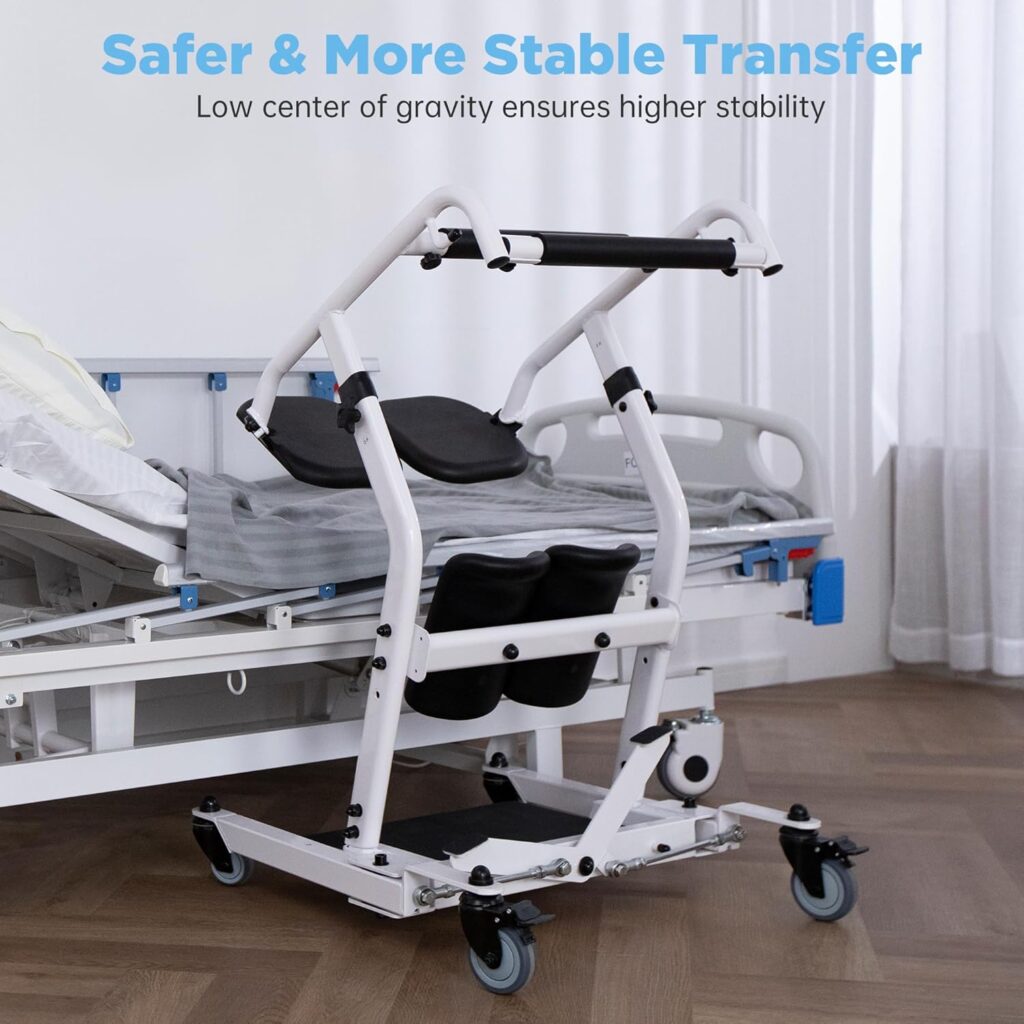
- Do Keep the Base Legs Widened: Whenever you are lifting or lowering a patient, keep the base legs spread out to maximize the device’s center of gravity.
What NOT to Do:
- Never Use on Steep Inclines: Only operate the stand-assist transfer lift on completely flat, level residential flooring surfaces.
- Never Exceed the 400 lbs Limit: Exceeding structural capacity risks catastrophic frame failure.
- Never Leave a Patient Unattended: Once a patient is secured or elevated in the lift, the caregiver must remain within arm’s reach at all times.
- Do Not Use on Completely Flaccid Patients: Remember, a stand-assist lift requires the patient to have enough cognitive capability to hold the handles and enough muscle tone to bear minimal weight on their legs. If they cannot assist at all, a full-body Hoyer lift is required.
Where to Implement the Stand Assist Lift in Your Home
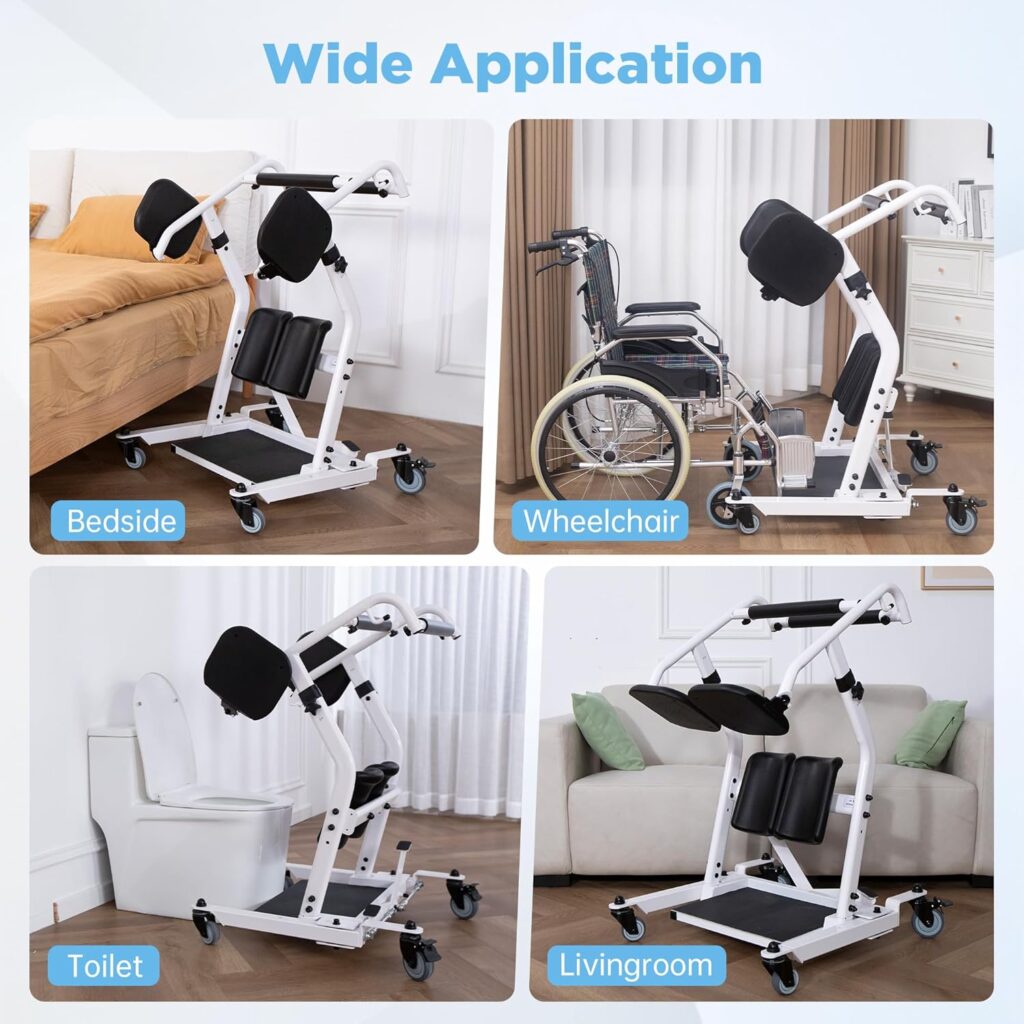
One of the greatest features of this upgraded lift is its highly versatile, low-profile footprint. It is engineered to seamlessly maneuver through standard American residential floor plans. Here is where to maximize its utility in your daily home care environment:
1. The Bedroom (Bed-to-Chair Transfers)
The most frequent transfers happen right at the bedside. The low-clearance base legs of this lift are specifically designed to slide underneath standard bed frames. This allows you to bring the lift flush against the mattress, turning morning wake-ups and nighttime tuck-ins into smooth, effortless routines.
2. The Bathroom (Commode and Toilet Utility)
Traditional bathrooms are notorious hotspots for slip-and-fall accidents. Because this stand assist lift allows the patient to comfortably hang in a semi-standing position with their backside accessible, it acts as the perfect tool for lowering individuals directly onto a toilet or elevated commode seat without straining the caregiver’s back.
3. The Living Room (Sofa and Recliner Transitions)
Deep, plush living room sofas are incredibly difficult to stand up from due to their low sink depth. The adjustable lifting arm of this device can reach low enough to safely pull a patient out of a deep recliner or sofa and transfer them safely to a stable wheelchair or dining chair.
Buying Guide: Why the Upgraded 400 lbs Stand Assist Lift Wins
If you are looking at different transfer options on the market, you might wonder why this particular model stands out. Here is a quick breakdown of how it stacks up against standard alternatives:
| Feature | Standard Lift Options | Upgraded Stand Assist Lift |
| Weight Limit | Typically 300 lbs | 400 lbs (Heavy Duty) |
| Caregiver Effort | Requires high physical strength | True One-Person Operation |
| Base Adjustability | Fixed base legs | Widening Base for Easy Clearance |
| Comfort Padding | Minimal or raw plastic guards | Contoured Deluxe Shin/Knee Pads |
By upgrading to a premium model, you aren’t just buying medical hardware; you are investing in peace of mind, long-term spinal health for yourself, and dignity for your loved one.
Frequently Asked Questions (FAQ)
Can one single person operate this lift safely?
Yes, absolutely. This lift is specifically designed to transform home care from a two-person job into an easy, one-person task. Because the mechanical components bear the entire weight load, the caregiver only needs to guide the machine and secure the straps.
Is this lift electric or manual hydraulic?
This model features an upgraded manual hydraulic/mechanical crank system. This provides a massive advantage for home care settings because it requires zero charging, has no batteries that can die during an emergency, and can be used seamlessly during power outages.
What type of flooring does this lift work best on?
The high-grade casters roll flawlessly on hardwood, laminate, vinyl luxury plank, tile, and low-pile residential carpets. It is not recommended for use on extremely thick, plush shag carpeting.
Can I use this for a patient who cannot stand at all?
No. For safety reasons, the patient must possess some degree of core stability and upper body strength to grasp the handrails, as well as the ability to bear minimal weight on their legs. If your loved one is completely paralyzed or non-weight-bearing, you should look into a full-suspension Hoyer sling lift.
How do I clean and sanitize the transfer lift?
The heavy-duty steel frame can be wiped down easily with non-abrasive household disinfectant wipes or a damp cloth with mild soap. The padded knee guards and handles are non-porous and moisture-resistant for simple sanitation.
Final Thoughts: Reclaim Your Energy and Dignity
Caregiving shouldn’t mean sacrificing your own physical well-being. Transitioning a loved one out of bed or a chair shouldn’t be a source of daily dread and anxiety.
The Upgraded Stand Assist Patient Transfer Lift bridges the gap between medical-grade institutional safety and comfortable, intimate home care. By making transfers a smooth, secure, one-person operation, it preserves the physical health of caregivers while providing unmatched stability and dignity to patients.
Stop straining your back and stressing your family. Upgrade your home care setup today and experience the life-changing difference of stress-free mobility.