How to Avoid Impulse Buying During Sales: 12 Practical Rules
Quick answer: Impulse buying during sales happens when urgency, discounts, and emotion override planning. To avoid it, shop with a written list and budget, use a wishlist and a 24-hour waiting rule for unplanned items, remove saved payment details, turn off promotional notifications, set a spending cap for each sale event, and ask whether you would buy the item at this price on an ordinary day. These simple rules slow the decision just enough to protect your money.
You open a shopping app to buy one thing. Forty minutes later, you have bought three. The prices looked good, the timer was ticking, and everything felt like a bargain. A few days later, you look at the boxes and wonder why you bought them.
This experience is so common that it is almost a rule of modern shopping. Sales are designed to make buying feel easy, urgent, and rewarding. That does not mean you are weak or careless. It means that the environment is built to influence you, and that a few simple habits can restore your control. This guide explains why impulse buying happens, the tricks that trigger it, and twelve practical rules to avoid it. It is the final guide in our series, and it ties together many earlier ideas from flash sale strategy, shopping budget planning, and spotting fake discounts.
What is impulse buying?
Impulse buying is an unplanned purchase made suddenly, driven by emotion or a tempting offer rather than a real need or a considered decision. It can involve small items like snacks and accessories, or large ones like gadgets and furniture. Not all unplanned purchases are bad. Sometimes you discover something useful. The problem arises when impulse buying becomes frequent, damages your budget, or leaves you with items you do not use.
Why sales trigger impulse buying
Sales combine several psychological triggers.
- Urgency. Countdown timers and “ends tonight” banners push you to decide quickly, which reduces careful thinking.
- Scarcity. “Only 3 left” labels make items feel more valuable and increase fear of missing out.
- Anchoring. A crossed-out higher price makes the sale price feel like a win.
- Social proof. “Thousands bought this today” suggests that everyone else is buying.
- The reward feeling. Getting a deal can feel exciting, and the excitement can be more about the discount than the item.
- Convenience. Saved payment details, one-click checkout, and instant payment methods remove friction that might otherwise give you time to reconsider.
- Personalisation. Recommendations, retargeted ads, and notifications are tuned to your behaviour, making offers feel relevant even when they are not needed.
Understanding these triggers helps you notice them. When you feel a rush, name it: this is the design working. Then use the rules below.
Common situations where impulse buying happens
- Big sale events, when banners and notifications are everywhere. See the complete guide to festive sale shopping.
- Flash sales and lightning deals. See flash sale strategy.
- Free-delivery thresholds, where you add unneeded items to avoid a fee.
- Emotional moments, such as stress, boredom, or celebration, when shopping feels like relief.
- Late-night scrolling, when tiredness lowers self-control.
- Social media, where influencers and ads make products look essential.
- Pay-later and EMI options, which make big purchases feel small.
- In-store checkout aisles and exhibitions, designed for last-minute additions.
The 12 rules to avoid impulse buying
Rule 1: Go in with a list and a budget
Before you open any shopping app or website, write down what you need and the maximum you will spend. A list gives you a reference point, and a budget gives you a limit. During sales, anything not on the list needs extra thought. For a full method, see how to plan and stick to a shopping budget.
Rule 2: Use a wishlist instead of the cart
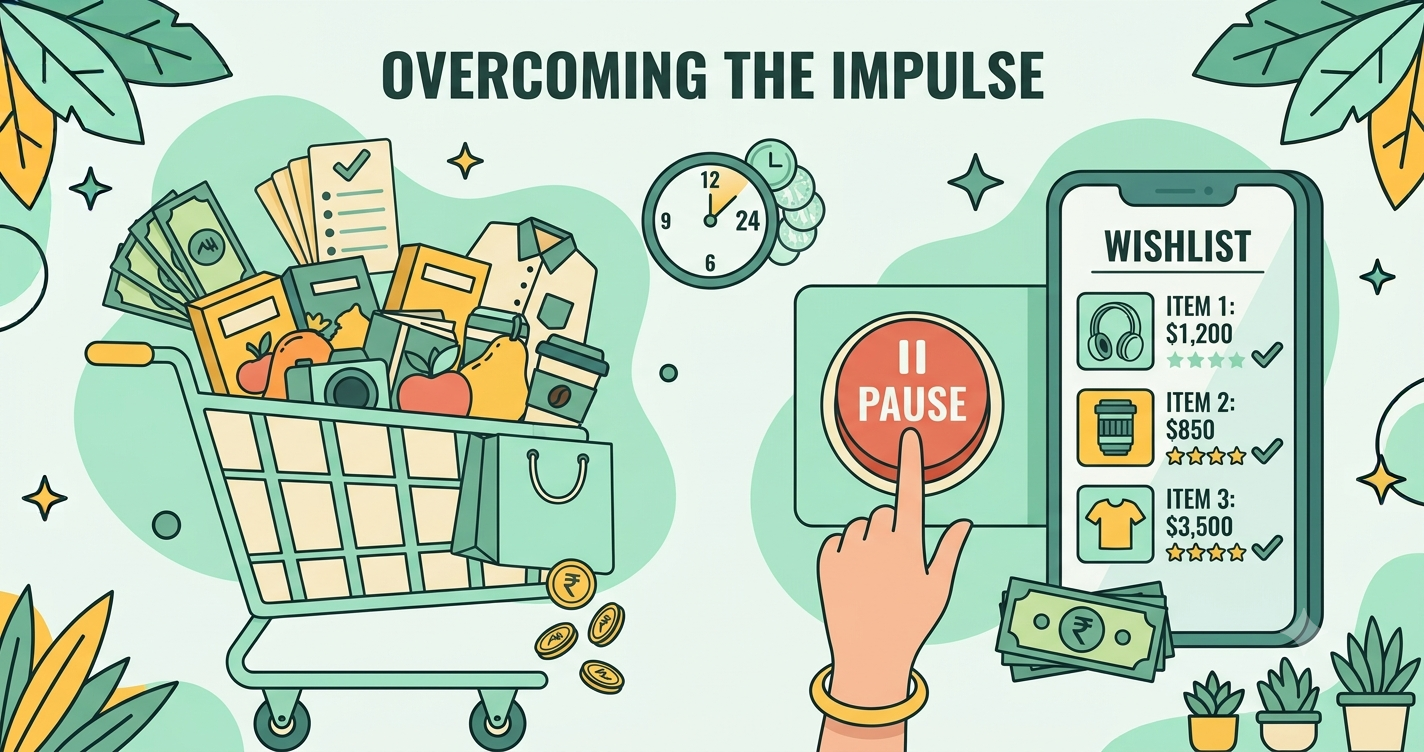
When something catches your eye, add it to a wishlist rather than the cart. This separates “interesting” from “decided.” You can review the wishlist later with a calmer mind, and set price alerts if you still want the item.
Rule 3: Apply the 24-hour rule
For any non-essential purchase, wait 24 hours. For expensive items, wait longer, such as a week. If you still want the item after the pause, and it fits your budget, buy it. Many desires fade within a day, and the sale often returns or is replaced by another. This rule is the single most effective habit in this guide.
Rule 4: Ask the “ordinary day” question
Ask yourself: would I buy this at this price on an ordinary day, with no sale banner? If the honest answer is no, the discount is the reason you want it, and it is probably an impulse. If yes, it may be a good deal.
Rule 5: Check the price history and compare
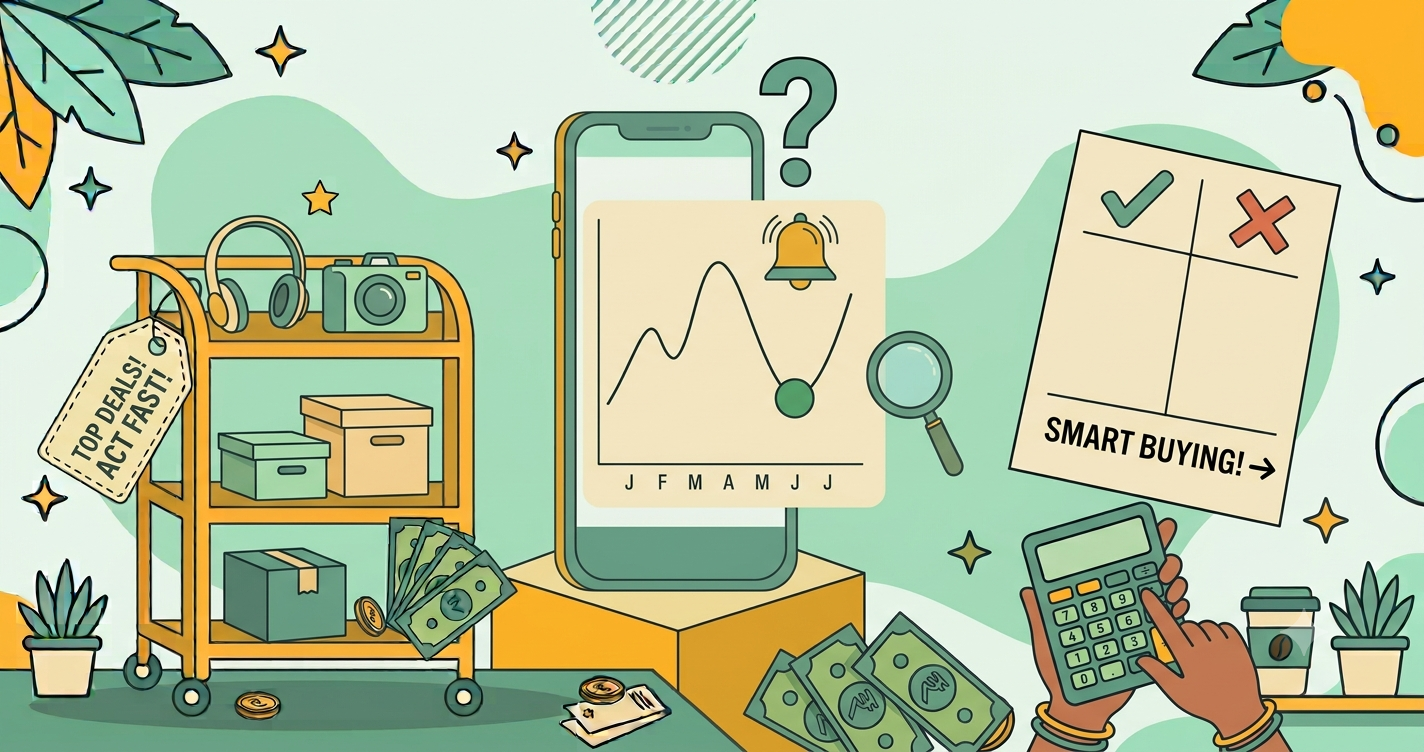
A quick check can reveal that the “deal” is an ordinary price. Use price history tracking and price comparison. Spending two minutes on this often takes the excitement out of weak deals and preserves your money for genuine ones.
Rule 6: Calculate cost per use
Divide the price by the number of times you realistically expect to use the item. A 4,000 pair of shoes worn 200 times costs 20 per wear. A 1,500 gadget used twice costs 750 per use. Cost per use shifts the focus from the discount to the value.
Rule 7: Create friction in your checkout
Remove saved cards and one-click payment settings from shopping apps. Log out after browsing. Typing card details or searching for a payment app gives you a few seconds to reconsider. Friction is a simple, effective defence against impulse.
Rule 8: Turn off promotional notifications and unsubscribe
Notifications are designed to interrupt you at moments when you are not planning to shop. Keep alerts only for wishlist items and price drops, and unsubscribe from promotional emails. Fewer prompts mean fewer impulses.
Rule 9: Set a spending cap for each sale event
Decide in advance how much you will spend during a sale, and stop when you reach it. Track purchases as you go. A cap turns a vague intention into a measurable limit. See how to shop smart during Diwali sales for a worked example.
Rule 10: Avoid shopping when you are tired, stressed, or hungry
Emotional states weaken self-control. If you notice that you shop to feel better, find other ways to cope, such as a walk, a call with a friend, or a hobby. Do not make purchase decisions when you are upset. Late-night browsing is particularly risky.
Rule 11: Be careful with free-delivery thresholds, EMI, and bundles
Adding items to reach free delivery can cost more than the fee. EMI and pay-later options can make purchases feel affordable when they are not. Bundles can include items you do not need. Evaluate each element on its own merits, and read no-cost EMI explained before spreading payments.
Rule 12: Review your purchases and learn
Each month, look at what you bought, and mark which items you use and which you regret. Notice patterns, such as categories, times of day, or apps that lead to regret. Adjust your rules accordingly. Learning from your own behaviour is more powerful than any general advice.
A worked example (illustrative numbers)
Priya sets a budget of 6,000 for a big sale event. Her wishlist has two items: a pair of running shoes at a target of 3,000 and a backpack at a target of 1,500, leaving 1,500 as a buffer.
- On day one, the shoes hit 2,900 and the backpack is 1,700, above target. She buys the shoes and waits on the backpack.
- She sees a flash deal on a smartwatch at “60% off, 3,200.” It is not on her list. She adds it to the wishlist and checks the price history. The usual price is about 3,500, so the real saving is under 10 percent. She skips it.
- The next day, the backpack drops to 1,450. She buys it.
- Total spent: 4,350, which is 1,650 under budget. She keeps the remainder for savings.
Without a list and a pause, the smartwatch alone would have taken more than half her budget on an item she did not need. The rules did not stop her from buying. They stopped her from buying the wrong things. The numbers are illustrative, but the pattern is familiar.
Tricks to watch for, and how to respond
- Countdown timers. Check whether the deal returns. Pause and use your list.
- Low-stock warnings. Check other sellers, and remember that scarcity messages can be generic.
- “Frequently bought together.” Ask whether you need the add-ons.
- Free gifts. Count the real value, and ask whether you would buy the main item without the gift.
- Cart abandonment emails. Treat them as a prompt to review, not a reason to buy.
- Loyalty tier progress bars. Do not spend just to reach the next level. See loyalty points and rewards.
- Coupons and cashback. They are useful for planned purchases, but not a reason to buy. See how to stack coupons, offers and cashback.
- Influencer recommendations. Check whether the content is sponsored, and read independent reviews. See how to spot fake product reviews.
Impulse buying and returns
A safety net for impulse buys is the return policy. If you buy something impulsively, you may be able to return it within the window. But returns are not always free or easy, and some sale items have strict terms. Read the return policy before you buy, and if you regret a purchase, act quickly. See return and refund policies explained. Do not rely on returns as a plan, since they cost time and effort, and sometimes money.
Impulse buying with credit and digital payments
Digital payments and credit make spending feel less real. A tap or a click does not carry the weight of handing over cash. If you notice that you overspend with cards or apps, consider using a lower limit, setting spending alerts, or using cash or debit for discretionary categories. If you use credit, pay your bill in full every month, and avoid using it for wants that are beyond your budget. For details on managing credit offers sensibly, read bank offers and credit card deals.
Helping children and family members
Impulse buying can affect the whole household. Children are exposed to advertising and peer pressure, and family members may feel pressure to spend during festivals and events. Talk openly about spending, set clear limits, and involve children in simple choices, such as picking one item within a set amount. Teach them the 24-hour rule, and lead by example. Habits formed early often last.
When impulse buying becomes a bigger problem
For some people, buying is closely tied to stress, anxiety, or low mood, and it can feel difficult to control. Signs may include frequent purchases that you regret, hiding purchases, spending beyond your means, running into debt, or feeling distress when you cannot shop. If this sounds familiar, you are not alone, and support exists. Consider talking to a trusted friend or family member, and consider speaking with a qualified professional, such as a counsellor or financial adviser, who can help. This article offers general guidance, not medical or financial advice.
A simple pre-purchase checklist
- Is this on my list or do I genuinely need it?
- Would I buy it at this price on an ordinary day?
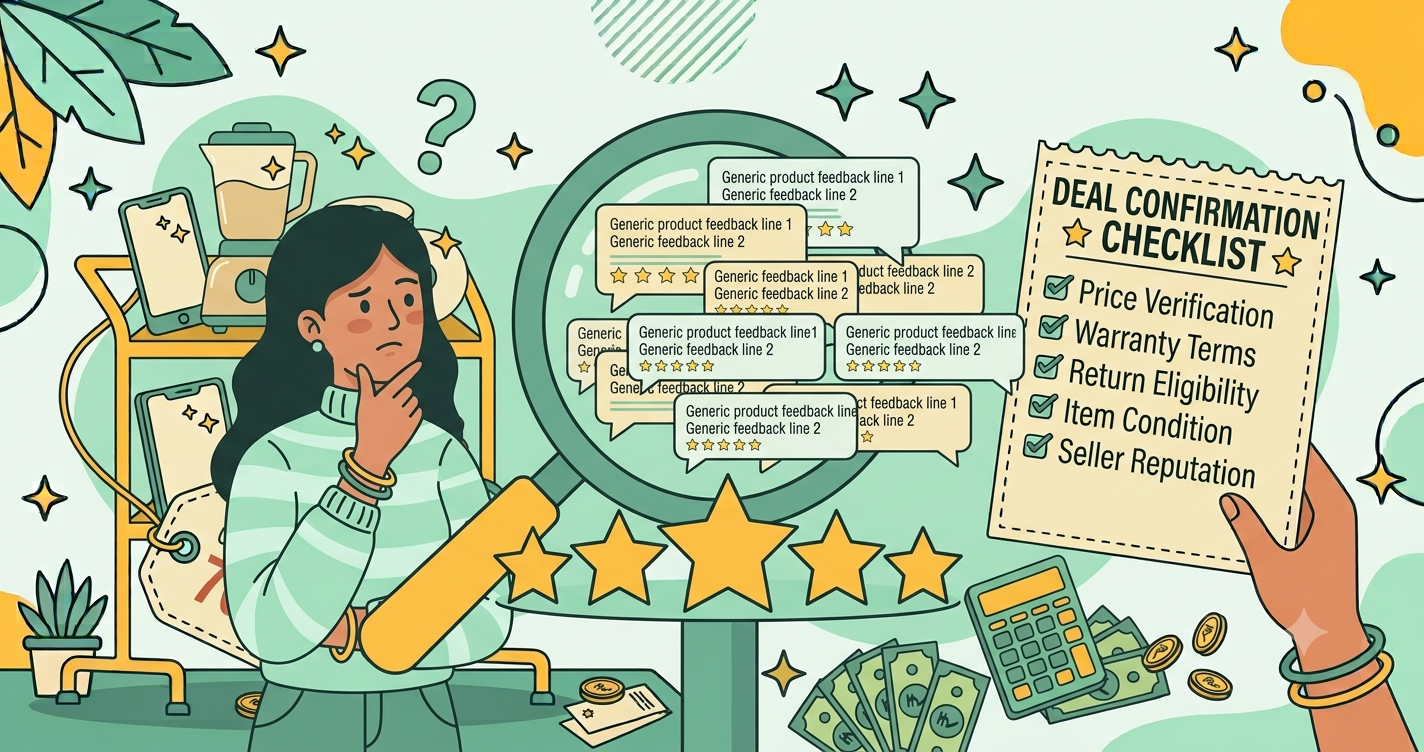
- Have I checked price history and compared sellers?
- Does it fit my budget and sale cap?
- How many times will I use it?
- Have I waited 24 hours, or a week for big items?
- Do I know the return and warranty terms?
- Am I calm, rested, and not shopping to cope with a bad mood?
Frequently asked questions
What is impulse buying?
Impulse buying is an unplanned purchase made suddenly, usually triggered by emotion, urgency, or a tempting offer rather than a real need.
Why do sales make us buy more?
Sales use urgency, scarcity, anchoring, and social proof, which narrow our attention and make decisions feel rushed. Discounts also create a feeling of winning, even when we did not need the item.
How can I stop impulse buying online?
Use a wishlist, wait 24 hours, remove saved cards, turn off promotional notifications, set a spending cap for sale events, and shop only with a list.
Is it impulse buying if the item was on sale and useful?
If you would have bought it anyway at a fair price and it fits your budget, it is a planned purchase. If you only wanted it because of the discount, it is likely impulse.
What if impulse buying feels out of control?
If spending causes distress, debt, or conflict, consider speaking with a trusted person or a qualified professional. Compulsive buying can be a sign of deeper stress, and support is available.
Final thoughts
You do not need to give up sales or stop enjoying shopping. You only need to put a pause between the urge and the purchase. A list, a budget, a wishlist, a 24-hour wait, a quick price check, and a little friction at checkout are enough to protect most of your money from impulse. Over time, the pause becomes automatic, and your best purchases become the ones you chose calmly, not the ones a countdown chose for you. That is the real goal of every guide in this series: not just to find deals, but to make decisions you are glad you made.
Keep reading