
Category: Coupons & Cashback | Reading time: about 14 minutes
Loyalty Points and Rewards: How to Get Full Value
Quick answer: Loyalty points are worth only what you can redeem them for. To get full value, work out the rupee value of one point, redeem for the highest-value option, use points before they expire, and join only programs for brands you already shop with. Never spend extra just to earn points. A free program you use naturally is a bonus; a program that changes your spending is a cost.

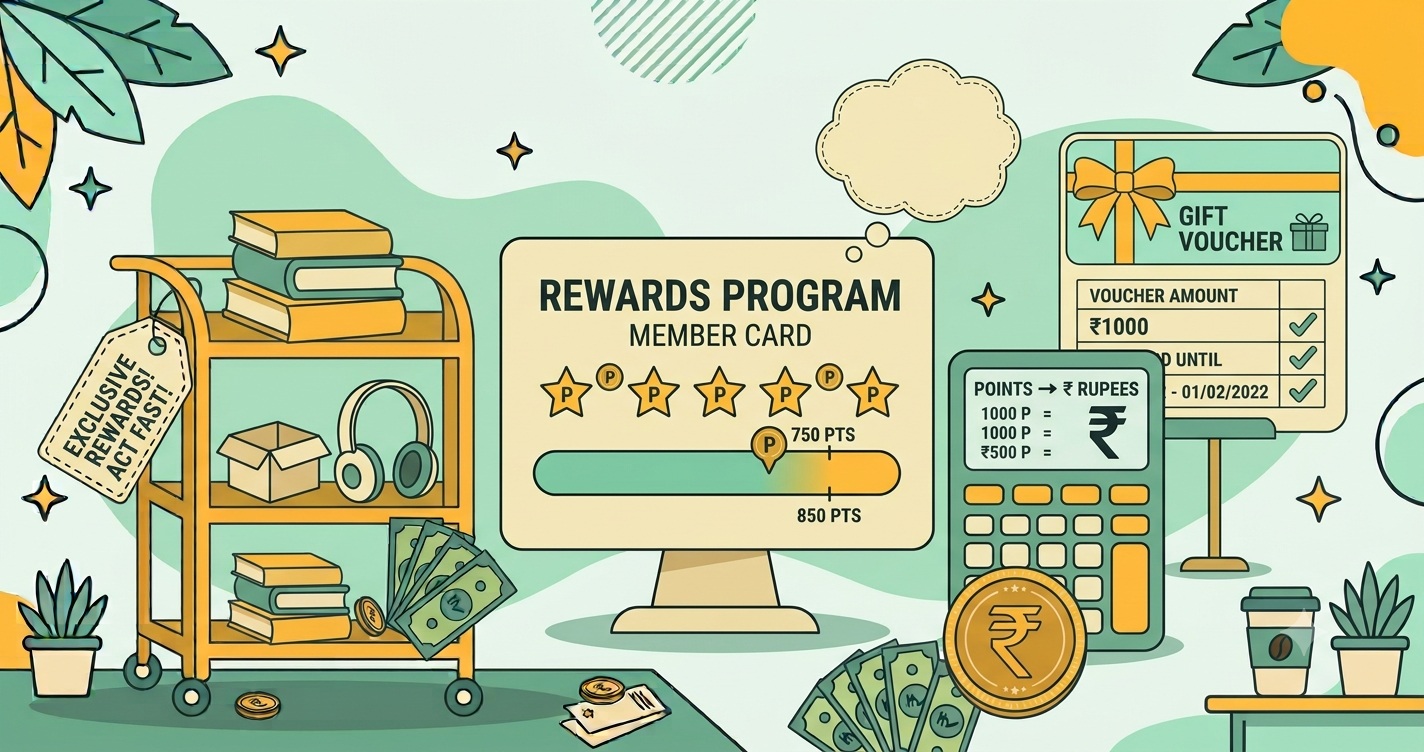
Open your phone and you will probably find several loyalty programs waiting: a store’s reward points, a bank’s card points, a fuel or grocery club, an airline or hotel scheme. Each of them quietly collects value in your name. Some of that value is real and useful. Some of it expires unused, is locked behind poor redemption options, or exists only to keep you shopping in one place.
This guide explains how loyalty and rewards programs work, how to calculate what points are truly worth, the best ways to redeem them, and the traps that waste them. It sits alongside the other savings guides on this site, including how cashback works and bank offers and credit card deals, and it builds on the basics in how online deals work.
What is a loyalty program?
A loyalty program rewards repeat customers. You earn points, stamps, tiers, or credits when you buy, and you redeem them later for benefits. The business hopes you will return more often, spend more, and choose it over competitors. In exchange, you receive a stream of small rewards or special access.
Common program types include:
- Points-based programs. You earn points per rupee spent and exchange points for discounts, vouchers, or products.
- Tiered programs. Higher spending unlocks levels such as silver, gold, or platinum, with better benefits at each level.
- Cashback-style rewards. A percentage of spend returns as credit. See how cashback works.
- Membership programs. A paid or free membership gives member prices, free delivery, or early access to sales.
- Co-branded card programs. Credit cards that earn reward points on every transaction, often with higher rates in certain categories.
- Coalition programs. Points that can be earned and redeemed across several partner brands.
Why businesses run loyalty programs
Understanding the business motive helps you stay in control. Loyalty programs give companies valuable data about what you buy and when. They make it easier to market to you with relevant offers. They encourage you to consolidate spending with one brand. And points that are never redeemed cost the company little. That does not make programs bad, but it means the design is not purely generous. A well-run program is a fair exchange. A poorly designed one quietly favours the company.
How to work out what a point is worth
Points are an abstract currency, and their worth depends on the conversion. Use this simple method.
- Find the redemption value. For example, 500 points equal a voucher worth 100. That means one point is worth 0.20.
- Find the earning rate. For example, you earn 1 point for every 10 spent, so 100 spent earns 10 points.
- Calculate the effective return. 10 points × 0.20 = 2 on 100 spent, or 2%.
The effective return tells you how generous the program really is. A program that returns 1% to 2% on regular spending is modest. One that returns 5% or more is stronger. Remember that these figures change when you choose different redemption options, which is why the next section matters.
A worked example (illustrative numbers)
Imagine a store gives 1 point for every 20 you spend. You spend 10,000 in a year and earn 500 points. Redemption options are:
- Option 1: a 50 discount voucher for 500 points (1 point = 0.10).
- Option 2: a 75 voucher for 500 points on selected items only (1 point = 0.15).
- Option 3: a branded mug for 500 points, which retails for about 120 but you do not need it.
Option 3 looks the best by retail value, but if you would never buy a mug, its value to you is zero. Option 2 gives the best rupee value if you will buy the selected items anyway. Option 1 is flexible. The “best” choice depends on what you would purchase regardless. In this example, your effective return on 10,000 of spending is only 50 to 75, which is 0.5% to 0.75%. That is a small reward, and it should not change what or where you buy.
The best ways to redeem points
Prefer high value per point
Compare the options and pick the one with the highest rupee value per point that you will genuinely use. Direct discounts and cash-equivalent credit are often the best. Merchandise and small gift items usually have the lowest value.
Redeem on things you already planned to buy
The best reward is one that reduces the cost of a planned purchase. Redeeming for an unneeded item is a loss, even if the points are “free.”
Combine with sales carefully
Some programs let you use points together with other discounts, and some do not. Check whether redeeming points on a sale item gives full value. For stacking logic, see how to stack coupons, offers and cashback.
Watch for bonus events
Programs sometimes offer double points, bonus tiers, or discounted redemption days. Waiting for these can improve value, as long as the points will not expire first.
Use points for big-ticket items
When points convert to a fixed rupee value, larger purchases do not increase the value per point, but they can absorb a large balance in one go, reducing the risk of leftover points expiring.
Avoiding expiry and devaluation
Points are not guaranteed to hold their value. Programs can change terms, increase the points needed for a reward, or let balances expire. To protect yourself:
- Check expiry dates in the app or on statements.
- Do not hoard large balances for years with no plan. Use them regularly on planned purchases.
- Read update notices about changes to earn and burn rates.
- Keep small accounts active if activity prevents expiry, but only if it fits your normal habits.
- Screenshot your balance and the terms if you are planning a big redemption, in case of disputes.
Credit card reward points: extra care
Bank and credit card reward points deserve special attention because they involve borrowing risk. A card that earns 2% in rewards but charges 3% monthly interest on unpaid balances leaves you far worse off if you do not pay in full. Rewards are valuable only when you clear the bill on time every month. Also check annual fees, caps on earning, and categories that are excluded from earning, such as fuel or rent in some programs. Our guide to bank offers and credit card deals explains the risks in more detail.
When loyalty programs are worth joining
- You already shop with the brand regularly, for example for groceries, fuel, or clothing.
- Joining is free and takes little effort.
- The program clearly states earning and redemption values.
- Points do not expire quickly.
- Benefits include things you value, such as free delivery, early sale access, or member prices.
When to skip a program
- It asks for a fee that is larger than the benefits you are likely to use.
- It requires large spending to reach meaningful rewards.
- The redemption options are poor or unclear.
- You would need to change brands, travel farther, or spend more just to earn points.
- It demands excessive personal data for little return. Privacy matters, so review what data is shared.
The psychology trap: spending to earn
The biggest danger of loyalty programs is not wasted points but wasted money. “Spend 500 more to reach the next tier” feels like progress, but it may mean buying things you did not need. Studies of consumer behaviour have long shown that tiers and progress bars can nudge people to spend more, so it helps to be aware of the effect. Set a simple rule: never make a purchase only to earn points or reach a tier. If the purchase would not make sense without the points, it does not make sense with them. For help resisting these nudges, see how to avoid impulse buying during sales.
Paid memberships: do the numbers
Some stores and platforms offer paid memberships with free delivery, member prices, or extra points. To decide if they are worth it, estimate your yearly benefit. Add up the delivery fees you would have paid, the discounts you would have used, and any value you place on perks. Compare the total with the membership fee. If the benefit is clearly higher, join. If it is close, skip it or revisit after a few months of actual usage. Remember that a membership you do not use is simply a recurring cost. Our guide on saving on OTT subscriptions applies similar thinking to streaming services.
Keeping your points organised
- List your programs in a note with the balance, expiry date, and the best redemption option.
- Review the list every two or three months.
- Use a single email address for loyalty accounts to find notices easily.
- Use strong passwords and two-factor authentication on accounts that hold value.
- Beware of messages claiming your points will expire and asking you to click a link or share an OTP. They are a common scam. See online shopping safety.
Tiers and status: are the upper levels worth chasing?
Tiered programs promise better benefits at higher levels, such as faster earning, free delivery, priority support, or exclusive sales. Before you aim for a higher tier, calculate the extra spending required and the extra value you would receive. If reaching the next tier needs 20,000 of additional spending to unlock benefits worth 500, the program is steering your budget, not rewarding your loyalty. Also check whether tier status resets every year, because a tier you earn this year may disappear if your spending drops.
A practical test is to ask what you would do if the tier did not exist. If you would spend about the same anyway, then the extra benefits are a genuine bonus. If you would spend less, the tier is the reason you are spending, and you should reconsider.
Loyalty programs during sale seasons
During big sale events, some programs offer bonus points or early access. These can be valuable if you were already going to shop. Plan your purchases before the event, decide which items you truly want, and check whether the program benefits are better than the sale discount alone. Our festive sale shopping guide shows how to set a wishlist and budget in advance, so points never drive your decisions.
Frequently asked questions
What are loyalty points?
Loyalty points are rewards a store, brand, bank, or airline gives you for spending, which you can later redeem for discounts, vouchers, products, or other benefits.
How do I calculate what a loyalty point is worth?
Divide the rupee value of the reward by the number of points needed to get it. Compare that with what you spent to earn the points to see your effective return.
Do loyalty points expire?
Many do. Expiry rules vary by program, so check the terms and the expiry date of your balance and use points before they lapse.
Are loyalty programs worth joining?
They are worth it when you already shop with the brand regularly, the program is free, and the redemption value is clear. They are not worth it if they push you to spend more than planned.
What is the best way to redeem points?
Usually the option with the highest value per point, such as a direct discount or a high-value voucher, rather than low-value merchandise or small vouchers.
Final thoughts
Loyalty points are a small, steady source of value when you treat them as a bonus on spending you would do anyway. Know what a point is worth, redeem for the highest-value option you will actually use, keep an eye on expiry, and refuse to let a progress bar decide your purchases. Do that, and your rewards will quietly lower your costs over time without changing the way you shop.


2 thoughts on “Loyalty Points and Rewards: How to Get Full Value | Deal Fyndr”