
Category: Coupons & Cashback | Reading time: about 13 minutes
First Order Discounts: When to Use Them (and When to Skip)
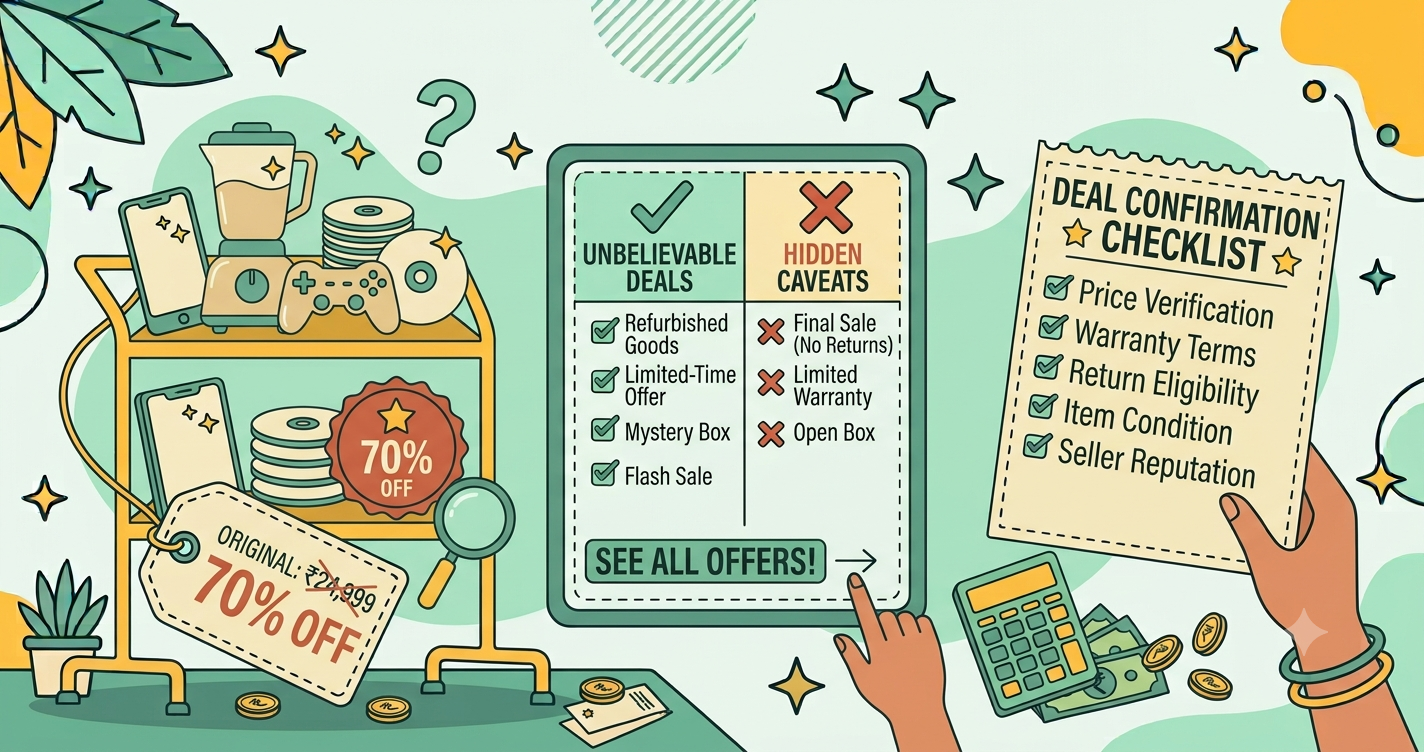
Quick answer: A first order discount is a welcome offer for new customers, such as a percentage off, a flat amount off, free delivery, or a free gift. It is worth using when you were already going to buy, the base price is fair, and the conditions are clear. It is not worth using when the offer pushes you to buy something unnecessary, the price is inflated, or it requires you to share more personal data than you are comfortable with.

You download a shopping app, and a banner greets you: “Welcome! Get 40% off your first order.” It is tempting. The deal feels personal and urgent, and it appears before you have even browsed. Stores know that a first purchase is a critical step, and they are willing to spend money to get it.
That makes first order discounts some of the most generous offers you will see. It also makes them worth examining carefully. This guide explains why they exist, what they typically include, the catches to watch for, and a simple way to decide when to use one. It connects to other guides in this series, including how to use coupon codes and how to stack coupons, offers and cashback.
What is a first order discount?
A first order discount, also called a new user offer or welcome offer, is a promotion available only on a customer’s first purchase. It may be delivered as an automatic discount in the cart, a coupon code, a voucher sent by email, or a reward revealed after signing up. Common forms include:
- A percentage off the order, often with a maximum amount.
- A flat discount such as 200 off above a minimum order value.
- Free delivery on the first order.
- A free gift or sample with the first purchase.
- Extra cashback or reward points.
- A discounted trial of a subscription or membership.
Why stores offer them
Winning a new customer is expensive. Advertising, app installs, and marketing campaigns all cost money. A first order discount is a direct way to convert a visitor into a buyer. Stores also hope that if your first experience is good, you will return and pay full or lightly discounted prices in future. The first order may even be unprofitable, because the real value comes from later purchases.
This explains why the offer is usually only available once. It also explains why the terms are strict: stores want genuine new customers, not repeat users trying to reuse the benefit. For the wider picture, see how online deals work.
Typical conditions and catches
Minimum order value
Many offers require a minimum cart value. A 150 discount with a 999 minimum may tempt you to add items you do not need.
Maximum discount cap
A “40% off” headline may be capped at a modest amount. On a large order, the effective percentage is much lower. Always calculate the rupee value.
New-account restrictions
Offers are tied to a new account, phone number, email, device, or delivery address. If any of these has been used before, the code may be rejected.
App-only or website-only
Some offers are available only inside the app, which may mean downloading and registering. Read what permissions the app requests.
Category and brand exclusions
Items already on sale, premium brands, or certain categories are often excluded.
Payment method requirements
You may need to pay prepaid or with a specific method. Compare with COD vs prepaid to understand the effect on the final price.
Limited validity
Welcome offers can expire a few days after sign-up. Do not register just because a countdown says so.
Data sharing
You may need to share your email, phone number, or permissions. Review the privacy policy and consider whether the discount is worth the data you provide.
A worked example (illustrative numbers)
An app offers “50% off your first order, up to 200.” You want a shirt priced at 1,200.
- 50% of 1,200 is 600, but the cap limits the discount to 200. You pay 1,000.
- Price history shows the same shirt sold at 1,050 last month on the same app, and another store sells it at 990 without any code.
The offer looks like 50% but delivers about 17% on this order (200 of 1,200). Compared with last month’s normal price, your real saving is 50, and it is more expensive than the competitor’s regular price. In this case, the first order discount is not a bargain. Had the shirt been 400 instead, the 50% would have been capped at 200 exactly, and the offer would have been excellent. The lesson is that the cap, the base price, and the alternatives matter more than the headline. That is the same reasoning we use in MRP vs selling price and comparing prices across websites.
When to use a first order discount
- You needed the item anyway. The offer simply reduces the cost.
- The base price is fair. Price history and comparison show you are not overpaying.
- The cap and minimum suit your order. You do not need to add unnecessary items.
- You trust the store. Check reviews, policies, and return terms. See return and refund policies explained.
- You plan to use the platform again, or at least you are comfortable with the account you are creating.
When to skip it
- The offer makes you buy things you do not need. A discount on an unneeded purchase is wasted money.
- The price is inflated. A big discount from a high starting price may still cost more than elsewhere.
- The store is unfamiliar and the price seems too good. Scammers use “new user” offers as bait. Read online shopping safety.
- The app asks for excessive permissions or sensitive data.
- The return policy is weak, especially for high-value items.
- A better offer is coming soon, such as a major sale where welcome offers may stack with discounts.
Timing your first order
The best moment to use a welcome offer is often when it combines with a sale, because stores sometimes allow both. Check whether the code works on discounted items. If it does, you may get a very strong price. If it does not, compare the welcome offer on a regular-priced item with the sale price without it, and choose the lower total. Some welcome vouchers last for several days or weeks, so you may be able to wait for a sale. Review our festive sale shopping guide to plan the timing.
Combining a first order offer with other savings
Welcome offers can sometimes be combined with bank offers, cashback, and payment app rewards, but rarely with another coupon code. Test the layers in the cart. A typical approach:
- Pick an item at a fair base price.
- Apply the welcome code or automatic discount.
- Select the payment option with the best bank or payment offer, as covered in bank offers and credit card deals.
- Check cashback value using our cashback guide.
- Review the final total before paying.
The ethics and risks of repeating first order offers
You may see advice about creating several accounts to get the first order discount repeatedly. Be careful. Most stores forbid it in their terms, and their systems detect the same phone number, device, or address. The consequences can include cancelled orders, withheld cashback, or blocked accounts. The saving is usually small compared with the risk, and it is not a habit we recommend. A better approach is to use welcome offers once per store, where they genuinely help, and rely on legitimate discounts afterward.
Referral programs and first order offers
Many stores let existing customers invite friends, and both receive a reward. If a friend refers you, you may get a welcome offer that is larger than the standard one. If you refer others, you may earn credit. Rules, expiry, and limits vary, so read the terms carefully. Learn more in how referral programs work. Be cautious about sharing codes in public places or with strangers, and never pay for a referral code.
First order offers on different kinds of platforms
Welcome offers appear almost everywhere, but they behave differently depending on the type of platform.
- Shopping marketplaces. Offers are often a discount code or an automatic reduction in the cart, usually with a cap and a minimum order value.
- Grocery and food delivery apps. Welcome offers tend to be large in percentage terms but capped at small amounts, and they may apply only on selected restaurants or items. See how to save money on online groceries for how to judge these.
- Fashion and beauty stores. Newsletter sign-up codes are common, and they may exclude sale items.
- Travel platforms. First booking discounts may apply to selected routes or hotels and may have strict conditions. Compare them with other options using flight and hotel deal strategies.
- Subscription services. A discounted or free trial may convert to a paid plan automatically. Set a reminder to cancel before the trial ends if you do not want to continue. Our OTT subscription guide covers this in more detail.
- Payment apps and banks. Welcome rewards often require completing specific actions, such as linking an account and making a minimum number of payments.
Whatever the platform, the same questions apply: What is the cap? What is the minimum? What is the base price? And will I use this service again, or is this a one-time purchase?
A simple three-question test before you claim an offer
- Would I buy this today without the discount? If not, the offer is tempting you rather than helping you.
- Is the final price lower than what other trusted stores charge? If not, the offer is not a deal.
- Am I comfortable with the account, data, and terms? If not, skip it, because no discount is worth a problem with your privacy or payments.
If all three answers are yes, claim the offer with confidence. If you are unsure, wait a day. A first order offer that is still available tomorrow loses nothing by waiting, and one that disappears was probably designed to rush you. Keeping that calm pause as a habit is one of the most valuable skills in this whole series.
Staying safe with welcome offers
- Download apps only from official stores, and check the developer name.
- Read app permissions. A shopping app rarely needs access to your contacts or messages.
- Use a secondary email address for newsletters if you prefer less inbox clutter.
- Be suspicious of messages that promise unusually large first order rewards, particularly if they ask for payment details or an OTP.
- Keep screenshots of the offer terms and your order confirmation.
Frequently asked questions
What is a first order discount?
A first order discount is a promotion offered to new customers on their initial purchase, such as a percentage off, a flat amount, free delivery, or a free gift.
Can I use a first order offer more than once?
Usually no. Stores typically limit it to one use per account, phone number, address, or device, and creating multiple accounts to repeat it may break the terms.
Are first order discounts better than regular sales?
Sometimes. Compare the final price with the sale price elsewhere. A big new user discount on an inflated price may still cost more than a fair price without an offer.
Should I give my email or phone number to get a first order code?
It is a common trade for a welcome code. Use a secondary email if you want to limit marketing messages, and read the privacy policy first.
Why is my first order code not working?
The account may already have an order, the code may require a minimum cart or app use, or the phone number or device may have been used before. See coupon not working? 10 common reasons and fixes.
Final thoughts
First order discounts are one of the few times a store gives you something just for showing up. Take them when they lower the cost of something you already planned to buy at a fair price, and skip them when they tempt you to buy more, trust less, or share more than you want. Calculate the real rupee saving, compare with other stores, and keep the offer in its proper place: a welcome gift, not a reason to shop.