
Category: Sale Seasons | Reading time: about 14 minutes
The Best Time to Buy Clothes: A Seasonal Price Guide
Quick answer: The best time to buy clothes is usually at the end of the season, when stores clear stock to make space for new collections, and during large sale events with genuine markdowns. New collections arrive at full price, so discounts are small at the start of a season. Buy items you will wear next season in the end-of-season clearance, buy urgent needs at a fair price, and use price history and comparison to avoid inflated discounts.

Clothing is one of the most predictable categories for pricing. Fashion runs on seasons, and retailers plan their stock, launches, and clearances around them. If you understand the calendar, you can buy the same shirt, jacket, or dress at a much lower price simply by choosing the right moment.
This guide explains how fashion pricing works, what happens at each stage of a season, how to time purchases for different kinds of clothing, and how to avoid common traps. It builds on our guides to end of season sales and festive sale shopping, and uses the same tools of price history and price comparison.
How clothing prices move through the year
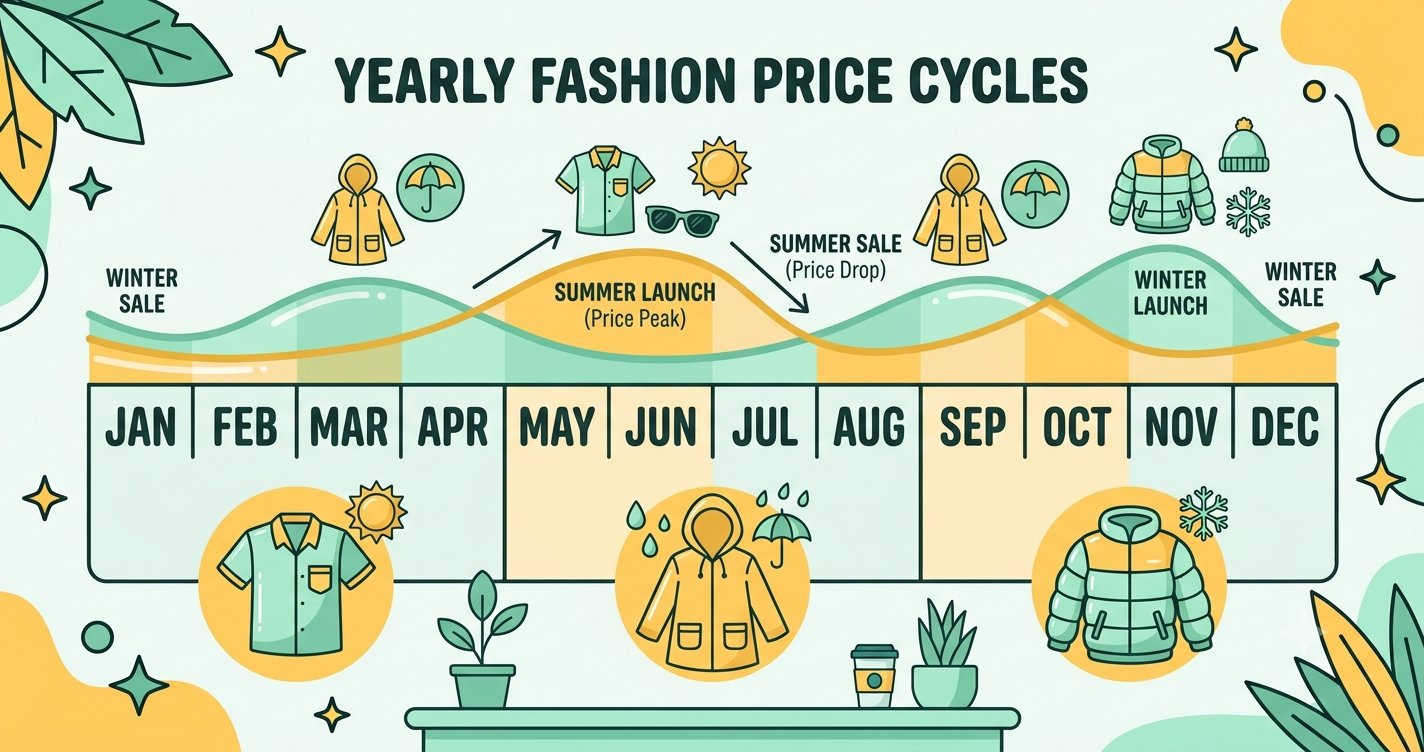
Retailers typically follow a pattern within each season:
- Launch. New collections arrive at full price. Stock is complete, but discounts are rare.
- Peak season. Demand is strongest, with limited discounts or promotions for specific items.
- Mid-season sales. Some brands run promotions to boost sales, often at modest discounts.
- End of season. Larger markdowns begin as stores need to clear stock.
- Final clearance. The deepest discounts, with limited sizes and colours left.
Understanding this cycle explains why the same item can cost twice as much at launch as at clearance. It also shows the trade-off between price and choice: the best prices come when selection is smallest.
The Indian clothing calendar
India has several overlapping retail seasons, and they shift by region. A general pattern is:
- Summer wear: collections launch in late winter or early spring, and discounts begin as summer ends.
- Monsoon wear: rainwear and quick-dry items are in demand before and during the rains, and discounted afterward.
- Festive wear: new ethnic and occasion collections launch before the festive season, with offers during festive sales and clearances afterward.
- Wedding wear: demand rises in wedding months, which can raise prices on popular items.
- Winter wear: collections arrive as temperatures drop, and discounts deepen as winter ends.
- School and uniform wear: demand peaks before the school year starts.
Because climates differ across India, local seasons matter. A shop in a colder region may clear winter stock later than one in a warmer region.
The best time to buy by clothing type
Winter clothing
Coats, jackets, sweaters, thermals, and boots are cheapest toward the end of winter and in early spring. Buying then means planning for next year, so check that sizes and styles will still suit you. If you need winter clothes now, look for early-season promotions or festive sale offers on older stock.
Summer clothing
Cotton shirts, dresses, shorts, and sandals are usually cheapest as summer ends. If you need them at the start of summer, compare mid-range brands that run regular offers, and look at last season’s styles.
Monsoon wear
Raincoats, umbrellas, and waterproof footwear are often discounted after the rains finish. Buying early in the season gives better choice but at higher prices.
Ethnic and festive wear
New festive collections are priced at full value before festivals. After the season ends, leftover items may be discounted. If you are buying for a particular occasion, order early to allow for alterations and returns, and compare prices across stores.
Wedding wear
Demand and prices are high during peak wedding months. Planning early, buying off-peak, and considering rental for outfits you will wear once can reduce costs. See wedding season shopping on a budget.
Everyday basics
T-shirts, innerwear, socks, and plain jeans have steadier pricing, with offers during big sales and brand promotions. Buying in multi-packs or during sales can reduce the per-item cost. Check quality, since cheaper basics wear out sooner.
Sportswear and activewear
These go on sale at season change and during brand events, and often overlap with general sale periods. Check older colourways and previous models, which are usually discounted more than new releases.
Footwear
Footwear follows seasons similarly, and sizes sell out in clearance. Prefer brands whose sizing you know, and check return terms.
Children’s clothing
Children outgrow clothes quickly, so buy for current needs and slightly ahead, not far ahead. End-of-season sales are good for the next size up when you are confident about growth.
Sale events that affect clothing prices
- End of season sales, the most reliable markdowns. See end of season sale guide.
- Festive sales, with offers on both new and old collections. See Diwali sales guide.
- National holiday sales, which can bring brand promotions. See Republic Day and Independence Day sales.
- Brand anniversary and loyalty events, sometimes with exclusive discounts for members.
- Black Friday and year-end sales, particularly for international fashion brands. See Black Friday sales in India.
- Flash sales, which can offer real deals or just urgency. See flash sale strategy.
A worked example (illustrative numbers)
You want a good winter jacket. Last year, you noticed the following for a particular brand’s jacket:
- At launch in early winter: 5,500.
- During the festive sale: 4,800.
- In mid-winter: 4,500.
- At the end of winter: 3,000, with limited sizes.
If you need the jacket now, the festive sale price gives a saving of about 700 against launch. If you can wait until the end of winter and plan for next year, you save about 2,500, a 45% reduction, although you must store the jacket and trust that the style and fit will still suit you. If your size is limited, you could choose a similar jacket from another brand. The right choice depends on urgency, size availability, and how much you value choice. The numbers help you make that decision consciously instead of accepting the first banner you see.
Spotting real versus inflated clothing discounts
Fashion discounts are especially prone to exaggeration. A shirt “marked down from 3,000 to 1,200” may never have sold at 3,000. To check:
- Compare similar items across brands. If a similar-quality shirt regularly sells at 1,000 to 1,300, the “60% off” is just the normal price.
- Look at the brand’s regular promotions. Some brands have permanent sales.
- Check price history where trackers cover the store.
- Judge by quality and fit, not just price. A cheap item that does not fit or lasts a few washes is expensive.
For more on this, read 12 ways to spot a fake discount and MRP vs selling price.
How to plan your wardrobe purchases across the year
Make a yearly wardrobe plan
List what you need for each season: work outfits, casual wear, festive outfits, sportswear, and weather-specific items. Note which items need replacing soon.
Create a purchase calendar
For each item, note the best time to buy, based on the patterns above. For example, buy winter wear at the end of winter, summer wear at the end of summer, and festive wear before or after the festive period depending on urgency.
Track prices of key items
Keep a small wishlist with the brand, model, and prices over time. Set price alerts where possible.
Set a clothing budget
Decide how much you will spend per month or season, and keep to it. See shopping budget planning.
Do a regular wardrobe review
Before buying new items, check what you already own. This reduces duplicates and shows what is truly missing.
Combining timing with other savings
Timing is only one lever. You can also save by stacking coupons, bank offers, and cashback, and by using loyalty points. Check the terms to see if clearance items are eligible. For methods, see how to stack coupons, offers and cashback, how to use coupon codes, and loyalty points and rewards.
Online versus in-store clothing shopping
Online shopping offers convenience, wide selection, and easy price comparison. The main risk is fit, so check size charts, read reviews that mention sizing, and know the return policy. In-store shopping lets you try items, feel the fabric, and judge quality, and you can often find in-store-only offers. A common approach is to try items in store and then compare online prices, or to order multiple sizes from stores with easy returns. Read return and refund policies explained before ordering.
Common mistakes when timing clothing purchases
Buying at launch by default
Unless you need the item immediately or it is a limited release, launch pricing is rarely the best value.
Waiting too long for the final markdown
The best price often comes with the poorest selection. If you have specific needs, buy earlier in the clearance.
Buying for a future size or style you are unsure about
A good price does not help if the item will not fit or suit you later.
Ignoring quality
Low prices on poorly made clothes lead to more frequent replacement. Cost per wear matters more than the sticker price.
Forgetting storage and care
Items bought for next season need proper storage. Wash or clean them as needed and keep them dry.
Impulse buying in sales
Sales encourage unplanned purchases. Use your list and a waiting rule. See how to avoid impulse buying during sales.
Think in cost per wear
One useful way to judge clothing value is cost per wear. Divide the price by the number of times you expect to wear the item. A 3,000 jacket worn 100 times costs 30 per wear. A 900 top worn twice costs 450 per wear. Discounts matter less than whether you will actually wear the item. When you are tempted by a big markdown, ask how often you will wear it, and whether it works with other clothes you own. This single question prevents many regrets.
Sustainable timing: buy less, wear more
The cheapest clothes are the ones you do not need to replace. Timing your purchases around sales is useful, but it works best alongside a habit of buying fewer, better pieces and caring for them well. Wash according to the label, repair small damage early, and rotate items so none wear out too quickly. Before buying something new, check whether you can repair, alter, or restyle what you already own. When you do buy, prefer versatile pieces that work across seasons and occasions. This approach reduces spending year after year and keeps your wardrobe easier to manage.
Frequently asked questions
When is the cheapest time to buy clothes?
Usually at the end of a season, when stores clear seasonal stock, and during major sale events. Winter clothes are often cheaper as winter ends, and summer clothes as summer ends.
Should I buy winter clothes in summer?
If you can plan ahead and store them well, off-season buying often gives lower prices, but styles and sizes can be limited. Check fit and quality carefully.
Are festive sale clothing discounts real?
Some are, but new festive collections are often discounted less than older stock. Compare with end of season prices and check the original price.
When do new clothing collections launch?
Brands usually launch new seasonal collections just before or at the start of a season, which is when prices are highest and discounts are smallest.
Is it better to buy clothes online or in stores during sales?
Online offers convenience and wider selection, while stores let you check fit and quality. Choose based on how confident you are about size and the return policy.
Final thoughts
Fashion pricing is more predictable than it looks. Learn the seasonal rhythm, decide what you need, and match each purchase to the right moment. Buy early when you have specific needs, wait for clearance when you are flexible, and always judge value by fit, quality, and cost per wear. With a simple calendar and a little patience, you can build a wardrobe you like at a lower cost, without being swept along by every banner.