How Cashback Works and When You Actually Get Paid
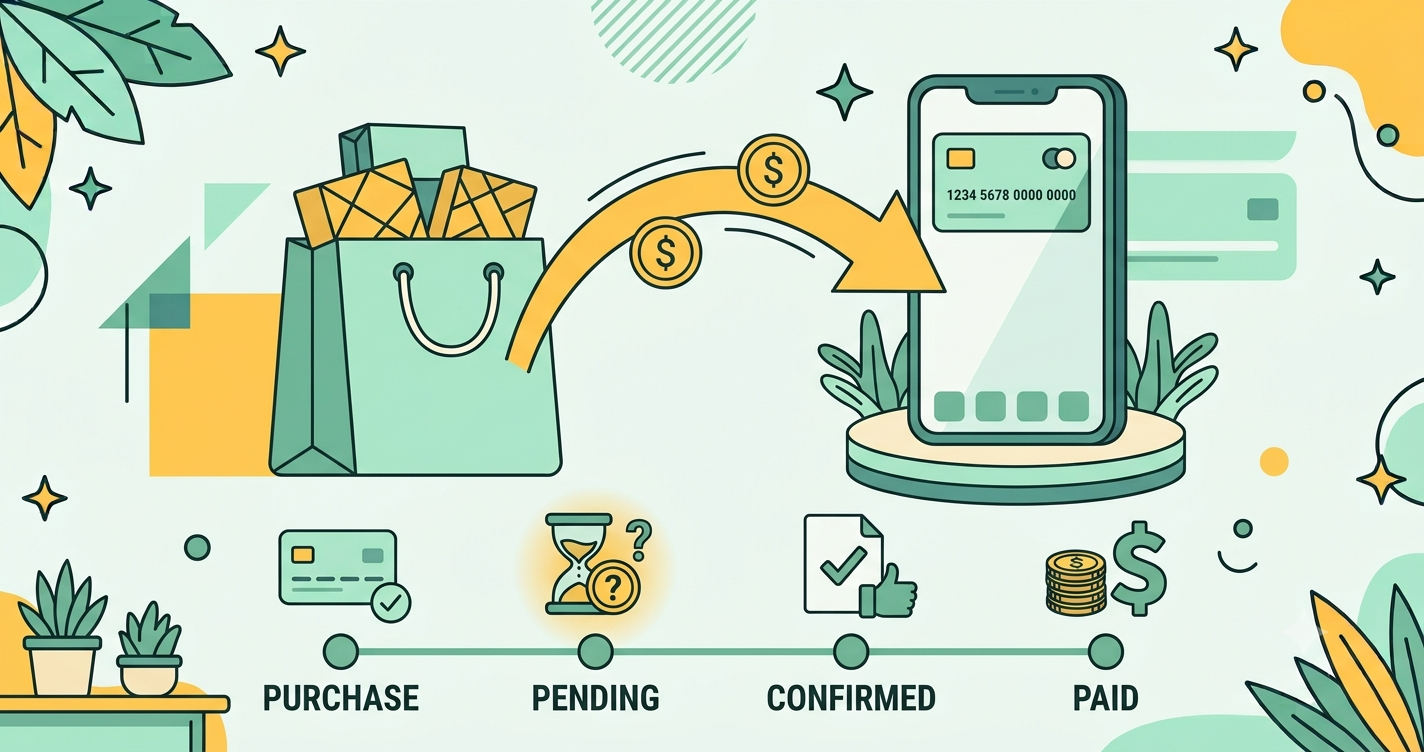
Quick answer: Cashback is a reward that returns part of your spending after a purchase, as bank credit, wallet balance, points, or store credit. It is not deducted at checkout. Instead, a tracking system records your order, waits until the return period ends, and then confirms the reward. That is why cashback often shows as “pending” first. To get paid, follow the offer’s conditions exactly and check how and when the money can be used.
Cashback sounds simple. You spend money, and some of it comes back. In practice, shoppers often find it confusing. Why does it say “pending” for weeks? Why did one order give cashback and another did not? Why is the reward in a wallet you can only use on one app? These questions are common, and the answers affect how valuable cashback really is.
This guide explains how cashback works from start to finish: who pays for it, how it is tracked, the different types, typical timelines, why it sometimes goes missing, and how to count it honestly when you compare deals. It is part of our series on getting real value from offers, alongside how online deals work and how to use coupon codes.
What is cashback?
Cashback is a promotional reward where a portion of your purchase amount is given back to you afterward. It might be a percentage of the order value, a flat amount, or a variable reward revealed after payment. Unlike a discount, which lowers the price at the time of purchase, cashback is paid later, and the form it takes can vary.
Who pays for cashback and why?
Cashback is a marketing cost. The party that offers it hopes to gain something in return.
- Banks and card issuers offer cashback to encourage you to use their card or payment method. They earn fees from merchants and interest from some customers.
- Payment apps and wallets use cashback to attract users and build habits.
- Stores and brands offer cashback to win sales, especially during competitive periods.
- Cashback portals and affiliate sites earn a commission from the store when you buy through their link, and share part of it with you.
Understanding the funder helps explain the conditions. A bank wants card usage, so its cashback requires its card. A portal wants referral traffic, so its cashback requires you to click through its link first.
The main types of cashback
Instant cashback
Sometimes called an instant discount, this is applied at checkout and reduces the amount you pay. Strictly speaking, it is a discount rather than true cashback, but it is often marketed as cashback.
Post-purchase cashback to your bank or card statement
Credit card issuers often credit an amount to your statement or account after a billing cycle. It may be capped per month or per card.
Wallet cashback
The reward is credited to an app wallet or balance, which you can then use for future payments within that app. Wallet money may have expiry dates or usage limits.
Points or coins
Some programs give points instead of money. Their value depends on how you redeem them. See loyalty points and rewards for how to value them.
Store credit and vouchers
You receive credit that works only with the same store or brand. It can be useful if you shop there regularly, and wasted if you do not.
Scratch cards and surprise rewards
These show a variable reward, often small, after payment. The advertised maximum may be far higher than the typical reward, so treat the headline number with caution.
Portal cashback
You click through a cashback website or app to the store, shop as normal, and receive a percentage back. Tracking depends on cookies and links, so the sequence of steps matters.
How cashback tracking works
When you buy, the system must connect your order to the cashback offer. This usually works in one of these ways.
- Payment-based tracking. The bank or wallet sees the transaction and applies the reward according to the offer rules.
- Link-based tracking. A cashback portal gives you a special link. When you buy after clicking it, the store reports the sale back to the portal.
- Code-based tracking. A promo code attached to the offer identifies the source.
Problems arise when something breaks the chain. For example, using another coupon site, opening another tab with a different referral link, or switching devices before checkout can cause the tracking to fail and the cashback to be denied.
Why cashback shows as “pending”
Pending status is the stage between purchase and confirmation. It exists because the funder wants to make sure the sale is final. The system typically checks:
- Whether the order was cancelled.
- Whether the product was returned or refunded.
- Whether the return period has ended.
- Whether the store has confirmed the transaction to the tracker.
- Whether the order meets the offer conditions.
That is why a purchase with a 15-day return window may show pending cashback for at least that long. For bank card cashback, the wait may be until the end of the billing cycle.
Typical timelines
Timelines depend on the offer, so always read the terms. As a general pattern:
- Instant discounts: applied immediately at checkout.
- Wallet or app rewards: may credit within minutes to a few days, sometimes after delivery.
- Bank and card cashback: often credited in the next statement cycle or within a stated number of days.
- Portal cashback: commonly confirmed after the store’s return window closes and then paid after a payout threshold is reached.
Keep your order confirmation, screenshots of the offer, and the payment reference until the cashback is credited. This makes any complaint much easier.
Why cashback sometimes goes missing
Conditions not met
A minimum order value, a specific category, or a particular card may have been required. Read the terms before buying.
Tracking broken
For portal cashback, using a different coupon site or clearing cookies in the middle of your session can break tracking. Follow the portal’s steps exactly and avoid extra tabs.
Return or cancellation
If you return the product, the cashback is cancelled or reversed. Some programs deduct it from your refund or wallet. See return and refund policies explained.
Cap or limit reached
Many offers cap the reward per transaction, per month, or per user. Once you hit it, additional spending earns nothing.
Expiry
Wallet cashback or points may expire if unused. Check the expiry date as soon as you receive the reward.
Offer ended or changed
Some offers are time-limited and can be withdrawn. Take a screenshot of the terms displayed when you purchased.
How to value cashback honestly
Cashback is attractive, but it is not always worth its face value. Use this approach when you compare deals:
- Convert it to rupees. A percentage is meaningless until you calculate the amount, including any cap.
- Check the form. Money in your bank account is worth more than store credit or points you may not use.
- Apply a certainty discount. Because cashback is delayed and conditional, count it at a slightly lower value than an immediate discount.
- Include expiry and restrictions. If you are unlikely to use the wallet balance, count it as close to zero.
- Compare with a direct discount. A guaranteed discount is usually better than the same amount of cashback.
A worked example (illustrative numbers)
You are buying a 10,000 item. Two options are available:
- Option A: 5% instant discount, so you pay 9,500 now.
- Option B: 8% cashback, capped at 600, credited as app wallet balance after 30 days. You pay 10,000 now and receive 600 in the wallet later, usable only on that app.
Option B has the higher headline (8% versus 5%), but it is capped at 600 and arrives later in a restricted form. Option A saves 500 immediately and with certainty. If you shop regularly in that app, 600 in the wallet might be worth about 600 to you, and Option B could win. If you rarely use it, Option A is the better deal. The decision depends on how you will actually use the reward, which is why comparing the effective price, as explained in how to compare prices across websites, is so important.
Combining cashback with other savings
Cashback can often be combined with coupons and bank offers, but not always. Some offers exclude one another, and the order in which you apply them can change the final value. We explain how to do this without surprises in how to stack coupons, offers and cashback. For card-specific rewards, see bank offers and credit card deals, and for payment-app rewards read UPI cashback offers.
Cashback and taxes, fees and conversions
Most small cashback rewards are treated simply as a reduction in what you spent, but details can vary by program and by country. Some reward programs convert points into money at a fixed rate, charge a fee to withdraw, or only allow withdrawal above a minimum balance. Others let you redeem only for vouchers. Before you chase a reward, check whether you can actually withdraw or use it, whether there is a fee, and whether a minimum balance applies. If a program has strict redemption rules, a big headline reward may be worth much less than it looks.
Building a simple cashback routine
You do not need to track every rupee. A short routine is usually enough to capture most of the value without turning shopping into a chore.
- Pick one or two payment methods with solid, understandable rewards, instead of juggling many.
- Check offers before big purchases, not every small one, since the largest rewards come from large orders.
- Take a screenshot of the offer and your order summary at the time of purchase.
- Set a monthly reminder to review pending and credited rewards and to claim anything missing.
- Use balances before they expire, but only on things you would have bought anyway.
This keeps cashback in its proper place: a helpful bonus that supports a shopping plan you already have, such as the one described in shopping budget planning.
Cashback safety tips
- Use well-known portals and payment apps, and read recent user feedback.
- Never share an OTP, PIN, or password to “claim” cashback. Genuine rewards do not require them.
- Be careful with messages promising large cashback for clicking a link. These are common phishing attempts, covered in our safety guide.
- Do not overspend to reach a cashback threshold. A reward on money you did not need to spend is a loss.
- Check your statement or wallet regularly and raise a complaint within the time limit if a reward is missing.
What to do if your cashback does not arrive
- Check the terms and the status in the app or portal. Confirm you met every condition.
- Wait for the stated timeline to pass, including the return window.
- Gather evidence: order ID, payment reference, offer screenshot, and dates.
- Contact support through the official app or website, not through numbers found in search results.
- Escalate through the platform’s grievance process if needed, and, for unresolved issues, through consumer channels.
Frequently asked questions
What is cashback?
Cashback is a reward where part of what you spend is returned to you after the purchase, as bank credit, wallet balance, points, or store credit.
Why is my cashback pending?
Cashback usually stays pending until the return window ends and the store confirms the order was not cancelled or returned. Tracking checks also take time.
How long does cashback take to arrive?
It varies. Some instant offers credit within minutes, while others take days or weeks, often after the return period ends. Check the offer terms for the stated timeline.
What happens to cashback if I return a product?
Cashback tied to the order is usually cancelled or reversed. In some cases, the amount may be deducted from your refund or wallet.
Is cashback better than a discount?
A discount reduces the price immediately and is certain. Cashback comes later and may have limits or restrictions, so an equal-value discount is usually better.
Final thoughts
Cashback is a real benefit when you understand its conditions and use it wisely. Treat it as a bonus, not the main reason to buy. Read the terms, keep your evidence, count the reward at its realistic value, and make sure you will actually use it. If you do, cashback becomes one more layer of savings on top of a fair price rather than a distraction from a poor one.
Keep reading