The Best Time to Buy Electronics: Price Cycles Explained
Quick answer: Electronics prices usually fall when a new model launches, during large festive and brand sales, and as a product ages. The best time to buy is often a few months after launch or during a major sale, when the price is near its recent low. Check the price history of your exact model, watch for new-generation news, and buy sooner if you truly need the product now.
Everyone has been there. You buy a phone, laptop, or television, and a few weeks later the price drops, or a new model arrives. Electronics are a category where timing matters a great deal, because prices move with launches, sales, and technology cycles. A little knowledge can save you thousands, and it can also help you avoid waiting forever for a price that never arrives.
This guide explains how electronics pricing works, which events tend to produce lower prices, how to time different kinds of products, and when waiting is not worth it. It builds on price history tracking and price comparison, and it fits with the seasonal advice in our festive sale shopping guide.
Why electronics prices change
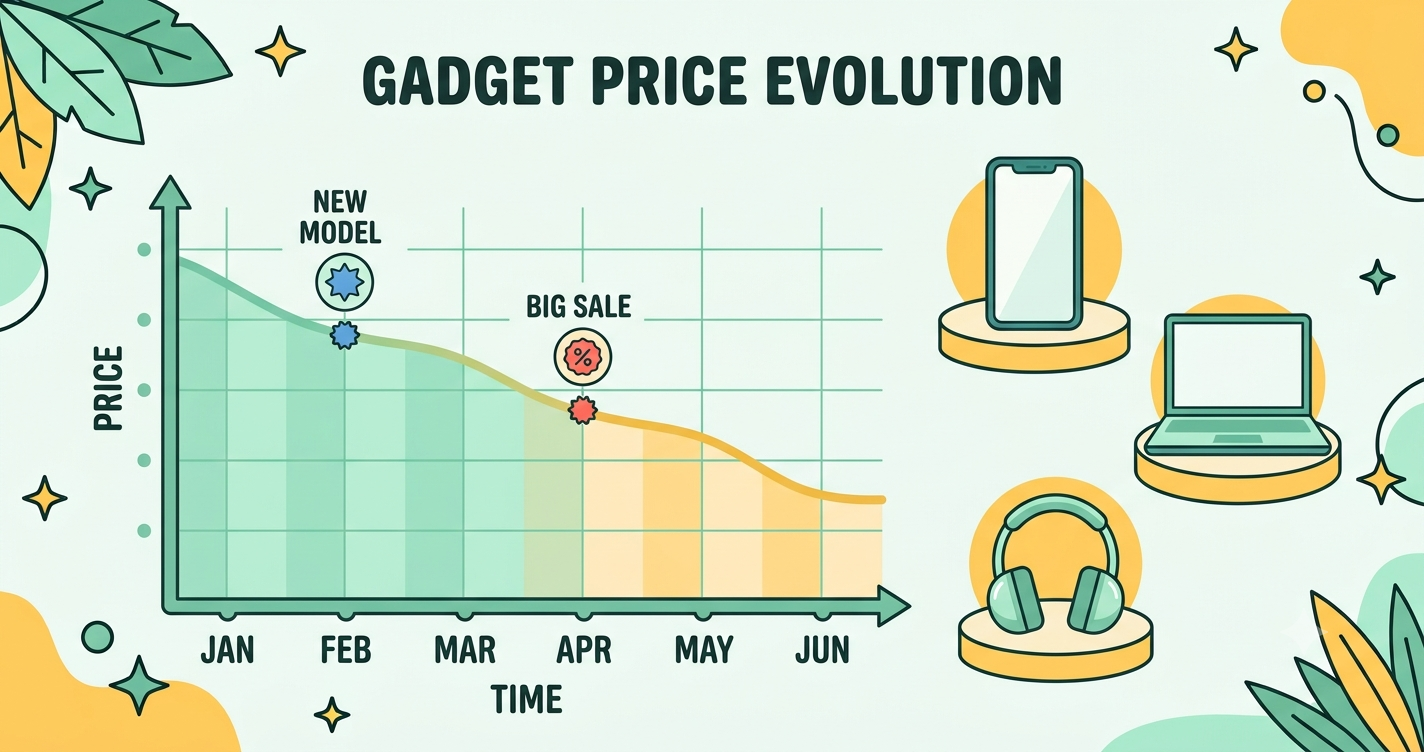
Electronics are unusual because technology improves quickly. A new generation arrives, and older models become less attractive, so sellers reduce their prices. Several forces move prices:
- Product lifecycle. Prices are highest at launch and tend to fall over time, with occasional bumps.
- New model launches. When a successor arrives, the previous model is often discounted to clear stock.
- Sale events. Festive and brand sales bring temporary discounts, bank offers, and bundles.
- Competition. Rival brands launch similar products, forcing price adjustments.
- Supply and demand. Shortages can raise prices, while excess stock lowers them.
- Currency and costs. Import costs, taxes, and exchange rates affect prices for imported components and products.
The product lifecycle in plain language
Launch period
Prices are usually at their highest. Discounts are rare, though bank offers or launch bundles may exist. Early buyers pay for being first.
Growth period
A few months after launch, offers begin to appear, particularly during sales. Prices may drop gradually or in steps.
Maturity period
The product is established, and prices are more stable, with regular sale dips. Many buyers find the best value here.
Clearance period
When a successor is released, or stock is aging, discounts deepen. This can offer excellent value, as long as the older model still meets your needs and warranty is intact.
Key events that bring lower prices
New model launches
When a new generation arrives, the previous one is often cut in price. This is one of the most reliable patterns, and it applies to phones, laptops, televisions, and many accessories. If you are not attached to the newest features, an older model at a lower price can be a smart buy.
Festive sales
The main festive season is a peak period for electronics offers, with bank discounts, exchanges, and bundles. See how to shop smart during Diwali sales for details.
Black Friday and year-end sales
Global brands and some stores run additional sales in late November and December. Read Black Friday sales: are the prices really lower? to judge them.
National holiday and brand-anniversary sales
Republic Day, Independence Day, and brand or platform anniversaries often bring offers. These events vary in depth, so compare with price history before buying.
Back-to-school and work-from-home periods
Laptops, tablets, and accessories may see offers when demand for students and professionals peaks. Check how these compare with other sale times for your model.
Financial year-end and clearance events
Some retailers clear stock to meet targets. These can offer opportunities, but they are less predictable than festive events.
Timing by product type
Smartphones
Phones usually have the clearest patterns. Launch prices are high, then fall over months, with deeper discounts during major sales and when the next model is released. Mid-range and budget phones launch more often and may see price cuts more frequently. Read our budget smartphone buying guide for how to choose.
Laptops
Laptop prices change with new processor generations, seasonal demand, and sale events. Last-generation models are often discounted. Compare specifications carefully so you are not buying an outdated configuration at a price that is only slightly lower. See the laptop buying guide.
Televisions
TV prices drop quickly after the new-year model launches and during major sales, sports seasons, and festive events. Older models can be excellent value. Check panel type, resolution, and warranty. Read the smart TV buying guide for details.
Headphones, earbuds, and speakers
These are discounted frequently, so waiting for a good dip is usually practical. Brand sales and festive events bring the best prices, but check that discounts are measured against realistic reference prices.
Smartwatches and fitness bands
Prices fall after new releases and during major sales. Compatibility with your phone should be confirmed before buying older models.
Cameras and accessories
Camera bodies and lenses tend to hold prices longer, with discounts around major launches and special events. Accessories such as bags, memory cards, and chargers are discounted often and are easier to time.
Gaming consoles and accessories
Prices may be stable for long periods, with discounts mostly during major sale events and bundle offers. New hardware generations can shift prices.
Home appliances
Refrigerators, washing machines, and air conditioners follow seasonal patterns. See when to buy home appliances.
How to tell whether a price will drop soon
- Check price history. Look for repeated dips and their timing, and note the lowest price. A product that has dipped during several sale events is likely to dip again.
- Watch for new model news. Official announcements, launch events, and credible reports can signal that older models will be discounted. Treat rumours with caution.
- Note the product age. A product only a few weeks old has little discount history. One that is over a year old may be nearing clearance.
- Look at stock signals. Limited availability can indicate that a model is being phased out, which can mean discounts or disappearance.
- Know the sale calendar. Major events are predictable in broad terms, though exact dates change each year.
- Set price alerts. Alerts notify you when a price reaches your target, so you do not have to monitor constantly.
A worked example (illustrative numbers)
A mid-range phone launched at 25,000. Its price history shows:
- Months 1 to 2: 25,000, no discounts.
- Month 3 festive sale: 22,000 with a bank offer for about 21,000 effective.
- Month 6: 20,500 regular price, dipping to 19,000 in a sale.
- Month 12, when a successor launches: 16,500, with clearance offers near 15,000.
If you need the phone immediately, buying at launch means paying a premium of several thousand rupees. Waiting until the festive sale saves about 4,000. Waiting a year saves about 10,000 but means using an older model and waiting for twelve months. The right choice depends on how soon you need it and how much the newest features matter. This is the trade-off every buyer faces, and the data helps you make it consciously.
When waiting is not worth it
- Your current device is broken or unsafe to use. Buying a fair-priced replacement is better than going without.
- The product is essential for work or study. The cost of delay may exceed the saving.
- The price is already close to the historical low. Waiting may bring only a small further drop.
- The model is about to be discontinued. Stock and warranty may become limited.
- You are tempted to wait indefinitely. A perfect price may never arrive. Set a deadline and a target price.
Common mistakes when timing electronics purchases
Buying on launch day by default
Unless you need the newest features, launch pricing rarely represents the best value.
Ignoring warranty on older stock
Older units may have part of their warranty already used, depending on manufacturing date and seller policies. Check this for clearance deals.
Waiting too long
Prices do not always fall. Components shortages, currency changes, or limited stock can raise prices.
Trusting discount labels over history
A “40% off” banner means little if the price was inflated beforehand. See 12 ways to spot a fake discount.
Ignoring total cost
Accessories, installation, extended warranty, and exchange values all affect the real price. Read is an extended warranty worth it? before adding one.
Buying from unverified sellers
Electronics are a common target for counterfeits and grey-market stock. Verify the seller and warranty. See online shopping safety.
How bank offers and exchanges change the best time
The lowest listed price is not always the lowest effective price. Electronics sales often include bank discounts, exchange bonuses, and no-cost EMI options that can shift the best moment to buy. A modest price cut combined with a strong card offer and exchange value can beat a deeper cut with no extras. When you compare two sale dates, calculate the effective price for each, using the methods in bank offers and credit card deals and how to stack coupons, offers and cashback. Also remember that exchange values depend on the condition of your old device, so the number shown in a banner is a maximum, not a promise.
Think about the cost of waiting
Waiting is not free. If you wait four months for a better price, you pay with time, and sometimes with a worse experience from an old or failing device. Estimate the cost of waiting honestly. If your current phone is slow but usable, waiting a few weeks for a sale may be easy. If your laptop crashes during work, the lost productivity may outweigh any saving. A useful approach is to decide on a latest acceptable date. If the price has not reached your target by then, buy at the best available price. This keeps you from drifting into endless waiting.
Refurbished and open-box options
Another way to buy at a lower price is to choose refurbished or open-box products. These can offer real savings, but the warranty, condition, and return terms vary. Compare them with new products at sale prices, because a good sale on a new item can beat a poor refurbished deal. Learn more in refurbished vs new products: what to choose.
A simple timing checklist
- Do I need this now, or can I wait a few weeks?
- What is the typical price and the lowest price for this model?
- Is a new model due soon?
- Is a major sale approaching?
- What is my target price?
- Have I set a price alert and a deadline?
- Do warranty and return terms look solid?
Frequently asked questions
When is the best time to buy a smartphone?
Prices often fall on older models after a new one launches, and large festive or brand sales can bring discounts. Check price history to find the typical dips for the model you want.
Is it better to buy electronics right after launch or later?
Launch day usually means the highest price. Waiting a few months often brings discounts, though the newest features and limited editions may be unavailable later.
Do electronics prices drop before a new model comes out?
Often yes. As a new generation approaches or arrives, stores clear older stock with discounts. Rumours of a launch can be a signal to watch prices.
Should I wait for a sale to buy a laptop or TV?
If you can wait, yes, for big events and model changeovers. If your current device has failed or you need the product now, buy at a fair price instead of waiting indefinitely.
How can I know if the price will drop soon?
Check the price history for repeated dips, watch for new model news, note upcoming sale events, and set a price alert. No method guarantees a drop, but patterns help.
Final thoughts
Timing electronics well is a mixture of patience and evidence. Learn the lifecycle, know the sale calendar, check price history, and decide in advance what price you will accept. If the price meets your target and you need the product, buy it with confidence. If not, set an alert and let the next dip come to you. The goal is not to catch the absolute lowest price, but to avoid paying much more than you need to, while getting a product that serves you well.
Keep reading