
Wedding Season Shopping on a Budget: Deals, Planning and Tips
Quick answer: To shop for a wedding season on a budget, set a total budget first, list every item and event, start early for big purchases, compare prices across stores, use bank offers and cashback carefully, and consider renting or reusing outfits you will wear once. Avoid advance payments to unverified sellers, get written quotes and receipts, and keep a margin for unexpected costs.
Wedding season brings celebration, family gatherings, and a long list of expenses. If you are hosting, you may be buying outfits, jewellery, gifts, decor, and supplies. If you are a guest, you may need new clothes, shoes, and presents for several events in a few weeks. Costs can add up quickly, and the pressure to buy “the best” can make careful budgeting feel difficult.
This guide offers a practical approach to wedding shopping. It explains how to plan and budget, when to buy different items, how to compare deals, where to save, and what to avoid. It builds on our guides to festive sale shopping, shopping budget planning, and the best time to buy clothes.
Why wedding shopping is expensive
- High demand. Many people buy at once during wedding months, which can raise prices on popular items and reduce discounts.
- Emotional spending. Weddings carry expectations about appearance, gifts, and hospitality.
- Many events. Engagement, sangeet, mehndi, wedding, and reception can each need separate outfits and accessories.
- Time pressure. Fixed dates leave less room to wait for sales or compare prices.
- Hidden costs. Alterations, accessories, travel, gifting, and last-minute needs are easy to forget.
Step 1: Set a total budget and divide it
Start by deciding how much you can spend in total, using money you can afford without borrowing. Then divide the budget across categories. A typical list might include:
- Outfits for each event, including alterations.
- Footwear and accessories.
- Jewellery, or rental of jewellery.
- Gifts for the couple and for family.
- Travel and stay, if the wedding is in another city.
- Beauty, grooming, and styling.
- Decor, supplies, and return gifts, if you are hosting.
- A contingency fund of at least 10 percent for unexpected costs.
Write the numbers down, and update them as you spend. If you use credit or EMI for any part, make sure you can repay comfortably. See no-cost EMI explained before using installments.
Step 2: List events and who needs what
Make a simple table of events, dates, and what each person needs. Include the dress code, colours, and any family traditions. This prevents duplicate purchases and last-minute scrambling. If you are a guest, note which outfits can be reused across events by changing accessories or dupattas. If you are hosting, assign responsibilities for buying and keep a shared list so family members do not buy the same items.
Step 3: Decide what to buy, rent, borrow, or reuse
Buy
Buy items you will use again, such as footwear, jewellery sets, and versatile outfits. Choose quality and fit over trends.
Rent
Renting is often the most economical option for heavy or very formal outfits you will wear once. Compare rental costs, deposit, cleaning charges, and late fees. Check the item’s condition, and ask for fitting and alteration options. Rental can also apply to jewellery, accessories, and decor.
Borrow
Family and friends often share jewellery, dupattas, and accessories. Borrowing saves money, but handle items carefully, and agree on responsibility for damage.
Reuse and restyle
Combine existing garments with new accessories, or restyle an outfit with different jewellery or draping. A tailor can modify a previous outfit for a new look.
Step 4: Time your purchases
Because wedding dates are fixed, planning backward from the date is the best strategy.
- Three to six months ahead: major outfits, jewellery, and venue-related items. This leaves time for alterations, returns, and sales.
- One to three months ahead: footwear, accessories, gifts, and beauty bookings.
- Two to four weeks ahead: final fittings, small items, and any gap-filling.
- Last week: only essentials and touch-ups. Avoid big purchases at the last minute.
If a festive sale or end-of-season sale falls in your window, use it for suitable items. See how to shop smart during Diwali sales and end of season sale guide. Wedding months themselves usually have high demand, so buying slightly earlier or later often costs less.
Step 5: Compare prices and sellers
Wedding items vary widely in price, so comparison matters. For clothing and accessories, check multiple stores, both online and local markets. For electronics and appliances given as gifts, use how to compare prices across websites. For items you buy often, track prices over time with price history tracking. Always check return and exchange policies, since fit and colour can differ from photos. See return and refund policies explained.
Where to save, category by category
Outfits
Compare brand stores, local boutiques, and markets. Ask about alteration charges, since they can add significantly. Consider ready-to-wear with minor alterations instead of fully custom outfits, unless a custom fit is important to you. Do not pay for accessories you already own.
Jewellery
Jewellery is a major cost. Compare the total price including making charges, check purity certification, and buy from trusted sellers with clear return and buyback terms. Consider imitation or rented jewellery for events where it will be worn once. Be careful with unusually cheap offers on precious metals, which may signal low quality or fraud.
Footwear and accessories
Choose comfortable, versatile pieces that match several outfits. Compare online and local prices, and use coupons and bank offers where available. See how to use coupon codes and bank offers and credit card deals.
Gifts
Decide a gift budget for each recipient, and prefer practical items. If you give cash or vouchers, consider the norms of your family and community. For gift cards, buy from official sources. See discounted gift cards: a safe buying guide.
Home and appliances for the couple
If you are buying home items or appliances for a newly married couple, compare prices and timing, and confirm delivery and installation dates. See when to buy home appliances.
Decor and supplies for hosts
Buy in bulk where it makes sense, compare wholesale markets with online prices, and reuse decor between events. Hire services with a clear written quote.
Travel and accommodation
Book early for better fares and rooms, and compare flexible and non-refundable options. See flight and hotel deal strategies.
A worked example (illustrative numbers)
A guest attends three events in two weeks and sets a total budget of 25,000, including a 10 percent contingency.
- Outfits: 12,000 for three events. They buy one new outfit at 5,000, rent one at 2,500 including deposit returned later, and restyle an existing outfit with a new dupatta for 800, totalling about 8,300.
- Footwear and accessories: 3,500, using one pair of versatile footwear and borrowed jewellery.
- Gift: 5,000, bought during a sale with a bank offer saving about 400.
- Alterations and styling: 2,000.
- Contingency: 2,500, partly used for a last-minute repair.
The total spent is around 21,300, within the 25,000 budget. The saving did not come from a single magic deal but from mixing buying, renting, borrowing, and restyling, along with early planning. The same approach scales to larger budgets and family-wide shopping.
Wedding shopping traps to avoid
Overspending to impress
The pressure to look a certain way can push budgets far beyond what is sensible. Decide in advance what you value most, and spend there.
Large advance payments
Some vendors ask for big deposits. Pay only to verified businesses, get written agreements and receipts, and avoid paying everything upfront. Read online shopping safety for more advice.
Too-good-to-be-true online offers
Social media sellers may show beautiful outfits and jewellery at very low prices, then deliver poor copies or nothing. Check reviews and return policies. See how to spot fake product reviews.
Inflated “wedding season” discounts
Sellers may raise prices before wedding months and then show big discounts. Compare with previous prices. See 12 ways to spot a fake discount.
Ignoring alterations and delivery time
Alterations can take days or weeks, particularly in busy seasons. Allow time, and confirm delivery dates in writing.
Impulse buying at events and exhibitions
Wedding exhibitions and sales can tempt you to buy on the spot. Use a list and a waiting rule. See how to avoid impulse buying during sales.
Borrowing to fund spending
High-interest loans or cards for non-essential spending can create long-term stress. Keep to your budget, and use credit only if you are sure of repayment.
Combining offers for wedding shopping
Large purchases such as outfits, jewellery, and gifts may qualify for bank offers, cashback, and loyalty rewards. Plan which card or payment method will give the best value, and check caps and minimums. Combine carefully using how to stack coupons, offers and cashback and loyalty points and rewards. But do not let offers push you into buying items you do not need. A discount on an unneeded purchase is still wasted money.
Managing family expectations
Weddings involve many people with opinions about what to buy. Talk early about the budget and priorities, and agree who is responsible for each expense. Be honest about limits, and propose practical alternatives, such as sharing accessories, renting outfits, or choosing simpler gifts. Clear communication reduces conflict and last-minute spending. Remember that the occasion is about people and celebration, not the price of an outfit.
Shopping for a wedding as a guest versus as a host
Guests and hosts face different priorities. As a guest, your main costs are outfits, gifts, and travel, and the goal is to look appropriate without spending more than the occasion deserves. Keep outfits versatile, reuse accessories, and set a fixed gift amount in advance. As a host, you carry the larger and less predictable costs: hospitality, decor, supplies, and many small purchases that add up. Hosts benefit most from a detailed written budget, a shared list among family members, and a habit of comparing at least two quotes for any service. In both roles, tracking spending in a simple note after every purchase helps you notice early if you are drifting over budget.
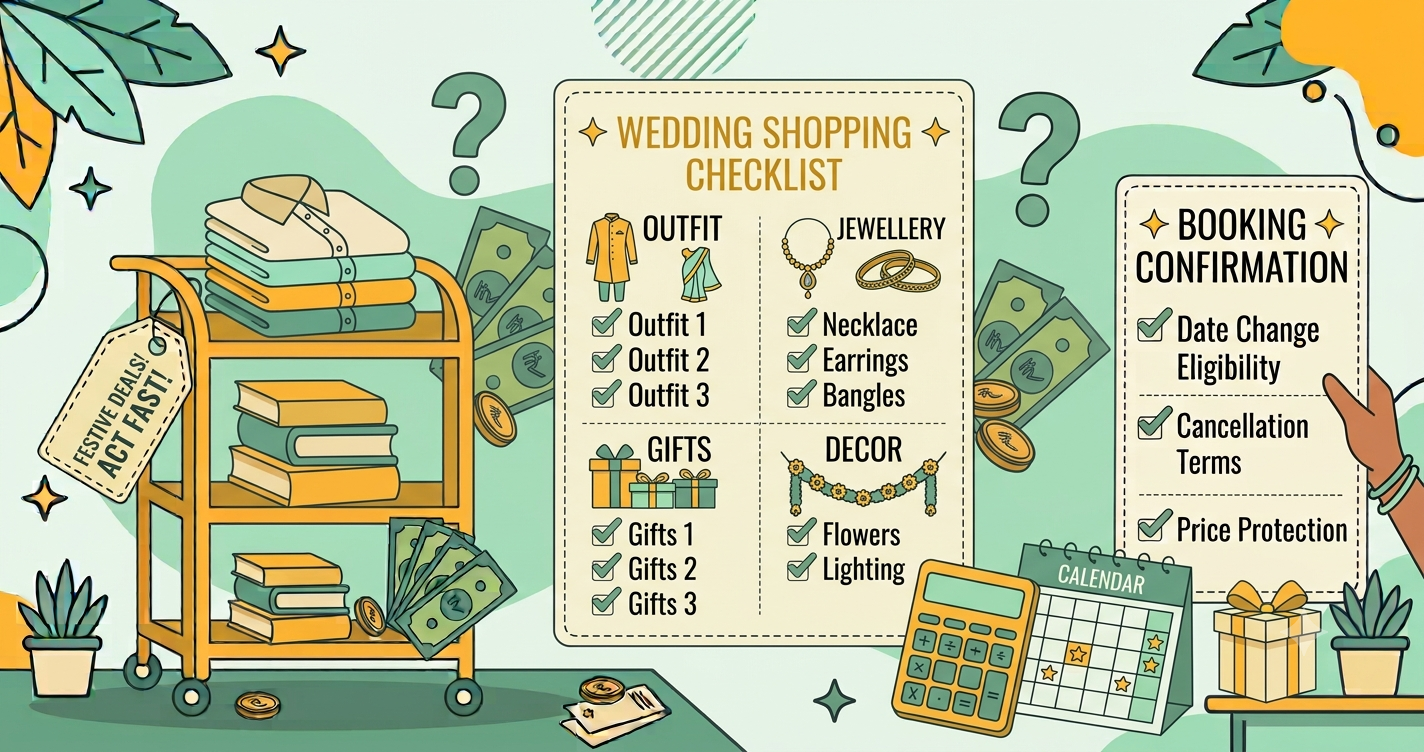
A wedding shopping checklist
- Total budget set, with a 10 percent contingency.
- Events, dates, and dress codes listed.
- Buy, rent, borrow, or reuse decisions made.
- Purchase timeline planned backward from the dates.
- Prices compared across at least two sources.
- Return, exchange, and alteration policies checked.
- Written quotes and receipts kept.
- Offers and payment methods planned.
- Delivery dates confirmed.
Frequently asked questions
How do I save money on wedding shopping?
Set a total budget, list every item, shop early, compare prices, use offers and cashback, consider renting outfits you will wear once, and avoid impulse purchases.
When should I start shopping for a wedding?
Start several months ahead for major items like outfits and jewellery, and a few weeks ahead for accessories and gifts. Early planning allows alterations, returns, and better prices.
Are wedding season sales worth it?
Sometimes. Demand is high, so discounts can be smaller on popular items. Compare with off-season prices and check that discounts are measured against realistic original prices.
Is renting wedding outfits a good idea?
For outfits you will wear once, renting can cost far less than buying. Check the rental terms, fit, cleaning policy, and deposit before you commit.
How do I avoid scams when shopping for weddings?
Buy from verified sellers, avoid large advance payments to unknown vendors, get written quotes and receipts, and be careful with social media sellers offering unusually low prices.
Final thoughts
Wedding shopping goes best when you start early, set a clear budget, and keep your priorities in view. Mix buying, renting, borrowing, and reusing, compare prices, protect yourself from scams, and keep a margin for surprises. If you do, you can celebrate fully without carrying financial stress afterward. The most memorable part of a wedding is rarely what anyone wore or spent, and a calm plan lets you enjoy exactly that.
Keep reading


